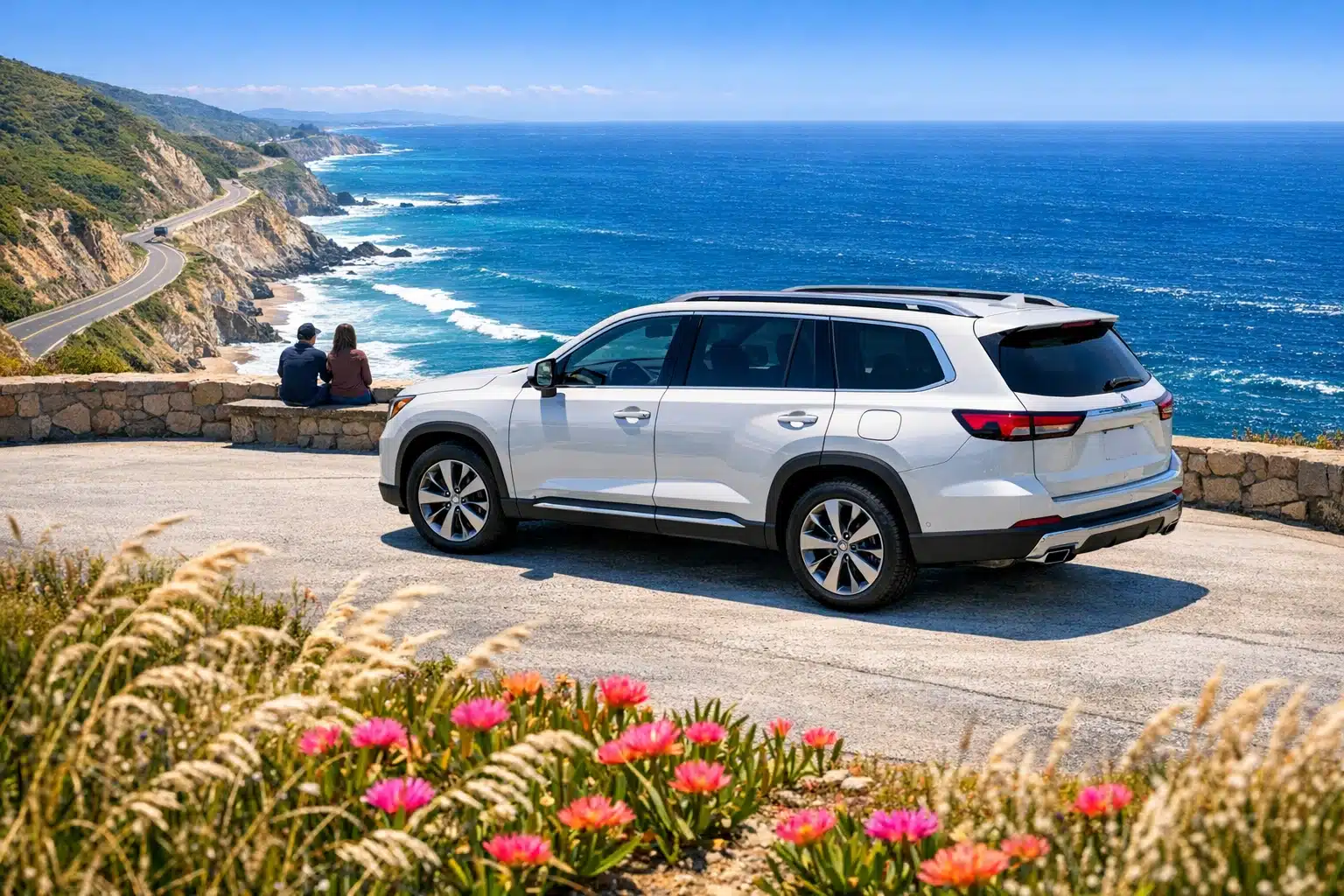
 Artificially generated image
 How to Find the Best 2026 Grand Highlander Deal
Shopping for a 2026 Grand Highlander can feel like stepping into a bright showroom full of shiny distractions, but the real bargain is usually hidden in the timing, paperwork, and discipline behind the test drive. A careful buyer looks beyond the monthly payment and studies total price, financing terms, trade-in value, insurance costs, and dealer extras. This guide explains how to compare offers, ask smarter questions, and find value without letting excitement make the decision for you.
Article outline
- Define what a great deal actually means for a three-row SUV buyer.
- Research market pricing, inventory, trim differences, and seasonal timing.
- Compare financing, leasing, and trade-in strategies using real-world math.
- Negotiate with dealers using out-the-door pricing and fee discipline.
- Finish with a practical checklist for families and long-term buyers.
What the Best 2026 Grand Highlander Deal Really Means
The best deal on a 2026 Grand Highlander is not automatically the lowest advertised number. That sounds simple, yet it is where many buyers lose money. Dealers can present an attractive discount on the window sticker and then recover the difference through financing markups, costly accessories, inflated protection packages, or a weak trade-in offer. In other words, the sticker is the opening line, not the entire story. A good deal is the combination of purchase price, ownership cost, and vehicle fit for your actual needs.
Start by defining what success looks like for you. A family that plans to keep the SUV for eight to ten years should think differently from a shopper who replaces vehicles every three years. If you drive a lot, a higher-priced hybrid version may still make financial sense over time through lower fuel use. If your annual mileage is modest and your budget is tight, a well-equipped gas model at a better price may be the smarter move. The right answer depends on usage, not on bragging rights.
When comparing offers, focus on these deal components together rather than one at a time:
- Out-the-door price, including dealer fees, taxes, and registration
- Interest rate or lease terms
- Value of included equipment and factory packages
- Expected fuel and insurance costs
- Trade-in allowance, if you are replacing another vehicle
It also helps to separate wants from needs. The Grand Highlander appeals to buyers because it offers real family space, strong road-trip comfort, and a more substantial third row than many midsize rivals. But the ideal trim for one household may be wasteful for another. If you need all-wheel drive, driver-assistance features, and practical seating materials, a mid-level trim can be the sweet spot. If you are being drawn toward a higher trim mainly because it looks impressive under dealership lighting, pause for a moment. Ask yourself whether those added features will still matter on a rainy school run in November.
Here is a useful way to think about it: imagine two deals. One is a lower trim with a smaller discount but no expensive add-ons. The other is a higher trim with a flashy discount, yet it comes bundled with accessories you never asked for. The first may be the better value even if the headline sounds less exciting. The strongest deal is the one that gives you the right Grand Highlander at the lowest realistic total ownership cost, not the one that simply looks dramatic in an advertisement.
Researching Price, Trims, Inventory, and Timing Before You Talk Numbers
Preparation creates leverage. Before you negotiate anything, learn how the 2026 Grand Highlander is positioned in your local market. Demand, inventory, and dealer competition often vary by region. In one metro area, family SUVs can sell quickly with minimal discounts. In another, several dealers may be sitting on similar stock and quietly willing to move. That difference matters more than most shoppers realize.
Start with the exact configuration you want or a short list of acceptable alternatives. The broader your list, the more flexibility you have. For example, being open to two exterior colors, two trim levels, or both front-wheel drive and all-wheel drive can expand your negotiating field. Limiting yourself to one rare combination may reduce your leverage because the dealer knows you are locked in emotionally.
Your research should include:
- MSRP and factory-installed options for the trim you want
- Dealer inventory within a reasonable driving radius
- Any manufacturer finance or lease promotions currently available
- Recent pricing patterns shown on reputable auto-shopping platforms
- Common local dealer fees and add-on practices
Pay special attention to timing. Newly arrived inventory often gets less discounting, especially if supply is tight. Vehicles that have been on the lot longer can be more negotiable. End-of-month and end-of-quarter periods sometimes encourage dealers to close marginal deals to hit volume targets, though this is not a guarantee. Shopping on a weekday can also help because the sales environment is calmer, and you are less likely to be rushed through decisions while the showroom is busy.
Another smart move is collecting written quotes from multiple stores. A phone call can be useful, but email or text gives you a record. Ask each dealer for the out-the-door number on a specific VIN or stock number, not just a broad promise of savings. Written quotes make it easier to compare offers side by side and harder for vague numbers to shift later.
Use caution with online listings that look dramatically better than the rest of the market. Sometimes they depend on rebates you may not qualify for, such as military, college graduate, or loyalty incentives. Sometimes they exclude mandatory accessories or dealer-installed items. If a deal looks too neat and too cheap, ask for the breakdown in writing. A legitimate offer will survive close reading.
Research takes time, but it buys clarity. By the time you set foot in a dealership, you should know the trim you want, the price range you expect, the backup options you can accept, and the promotions you may qualify for. When you know the market, the conversation changes. You are no longer asking what the price is. You are evaluating whether the dealer’s proposal deserves your business.
Financing, Leasing, and Trade-In Math That Can Change the Entire Deal
One of the easiest ways to overpay for a 2026 Grand Highlander is to concentrate only on the sale price while ignoring the financing structure. Dealers often discuss monthly payment first because it feels manageable, but payments can be stretched, padded, or reshaped in ways that make a deal look better than it is. The number that matters is the full cost over the term, not simply the amount due every month.
If you plan to buy, get preapproved through a bank or credit union before visiting the dealership. This gives you a real benchmark. The dealer may still beat that rate through a captive finance offer or promotional program, but now you can compare from a position of knowledge. A lower APR can save more than a slightly deeper discount on the vehicle itself. Consider this rough example:
- Financing 45000 dollars for 60 months at about 4.9 percent is roughly 847 dollars per month, with total interest around 5800 dollars.
- The same 45000 dollars at about 7.4 percent is roughly 899 dollars per month, with total interest close to 8900 dollars.
That is a difference of more than 3000 dollars in interest, even though both scenarios may be presented as manageable monthly payments. This is why you should compare purchase price and financing separately, then combine them at the end.
Leasing can make sense if you value a lower payment, drive within mileage limits, and like changing vehicles every few years. But lease shopping requires a different lens. You should ask for the selling price, the residual value, the money factor or equivalent interest rate, the lease term, the mileage allowance, and all upfront fees. A low lease payment can be built on a large amount due at signing, which reduces its appeal. As a general rule, large down payments on leases deserve caution, because that money may not be fully protected if the vehicle is totaled early in the term.
Trade-ins deserve their own line of analysis. Too many buyers treat the new car deal and the old car value as one fuzzy package. Keep them separate. Get quotes from multiple sources, including dealers, online buying services, and local used-car retailers if available in your area. A dealer offering a smaller discount on the Grand Highlander may still provide the better overall deal if the trade-in value is significantly stronger. The opposite is also true.
Before you sign, review these items carefully:
- APR, term length, and whether the rate is fixed
- Total amount financed after fees and add-ons
- Prepayment penalties, if any
- GAP coverage details, especially for low-down-payment financing or leases
- Trade-in payoff amount if you still owe money on your current vehicle
The big lesson is simple: the deal does not live in one box. It lives in the relationship between price, financing, lease structure, and trade value. When you understand the math, the sales process becomes much less mysterious and much more manageable.
Negotiating with Dealers Without Getting Lost in Fees and Add-Ons
Negotiation does not have to mean confrontation. In fact, the most effective buyers are often the calmest people in the room. They are organized, specific, and hard to distract. When shopping for a 2026 Grand Highlander, your job is not to win a dramatic battle. Your job is to keep the conversation pinned to measurable numbers.
The cleanest approach is to request out-the-door pricing from several dealers on the same or equivalent vehicle. That phrase matters because it includes the actual amount you would pay before financing, not just the selling price before taxes and fees. Ask for a breakdown that includes vehicle price, dealer documentation fee, accessories, registration, and any other mandatory charges. Once you have competing quotes in writing, you can compare them line by line instead of negotiating in a fog.
A simple message works well: you are ready to buy soon, you want the out-the-door price on a specific stock number, and you are contacting multiple dealers. That tells the salesperson you are serious without sounding theatrical. It also encourages cleaner offers because they know they are being compared.
Be especially alert to add-ons. Many profitable extras are presented late in the process, when buyers are tired and eager to finish. Some products may be useful depending on your driving habits and environment, but many are overpriced relative to their real value. Common examples include:
- Paint or interior protection packages
- VIN etching
- Nitrogen-filled tires
- Wheel and tire coverage
- Extended service contracts sold without time to review terms
If you want any of these, price them separately and research alternatives. Do not let them quietly migrate into the contract. A dealer may say an add-on is already installed and cannot be removed. In that case, you can still negotiate the total price or choose another store. Inventory competition is often the buyer’s best friend.
Also, avoid negotiating from the monthly payment backward. When the conversation starts there, term length can be extended and unrelated costs can be folded in. Instead, move in this order:
- Agree on the vehicle and options
- Negotiate the out-the-door price
- Discuss trade-in separately
- Compare financing or lease offers last
Inspect the actual vehicle before signing anything. Confirm the VIN, odometer reading, equipment, tire condition, and cosmetic state. If the showroom smile suddenly turns into paperwork speed, slow the pace. Read every line. A great deal can unravel in the finance office if you stop paying attention. Think of it like this: the dealership process is designed like a river current, always moving forward. The buyer who finds the best deal is the one who knows when to stand still and read the map.
Final Checklist and Conclusion for Families Shopping the 2026 Grand Highlander
By the time you are ready to buy, the goal is no longer to gather information. The goal is to make a confident decision without second-guessing yourself later. For most people considering a 2026 Grand Highlander, that means balancing space, comfort, features, and budget in a way that fits everyday life rather than showroom fantasy. A three-row SUV is a practical purchase, and the best deal is the one that still feels sensible six months after delivery.
Before committing, run through a final checklist. Make sure the vehicle truly matches your needs, especially if you are shopping for family use. Try the third row, cargo area, and child-seat setup if those things matter to you. If you frequently carry passengers or sports gear, bring the mental picture of a real Saturday, not an idealized one. A good deal on the wrong trim is still the wrong purchase.
Your final buying checklist should include:
- Written out-the-door quote from the dealer you choose
- Confirmation of any factory incentives or finance promotions
- Independent trade-in valuation comparison
- Insurance quote on the exact trim if possible
- Review of warranty terms and any optional coverage
- A clear yes or no on each dealer add-on
It is also wise to think about timing with emotional clarity. If you need a vehicle now, a solid and transparent deal today may be better than chasing a theoretical better deal next month. On the other hand, if your current vehicle is reliable and inventory is improving, patience can be valuable. The key is to decide intentionally rather than letting urgency be manufactured for you. Phrases like today only, someone else is coming for it, or this payment disappears in an hour are classic pressure tools. Sometimes they reflect real circumstances, but they should never replace your own review of the numbers.
For families, commuters, and road-trip buyers, the 2026 Grand Highlander can be a compelling choice when purchased with discipline. It offers the kind of space that makes daily life easier, but that convenience should not come with careless spending. If you compare trims honestly, gather quotes from multiple dealers, separate financing from vehicle price, and refuse vague paperwork, you dramatically improve your odds of landing a favorable deal. The best purchase is rarely the one made fastest. It is the one made with enough information to feel calm when you finally take the keys and drive home.