 Artificially generated image
 Explore Small Campers for Couples
Why Small Campers Have Become a Smart Choice for Couples
For many couples, a small camper offers something a hotel rarely can: freedom with a front door you can bring wherever the road bends. It turns weekend escapes, mountain loops, and quiet lake stays into practical plans instead of complicated productions. Because compact campers are easier to tow, store, and budget for than large RVs, they have become a smart entry point for partners who want comfort, flexibility, and a stronger sense of shared adventure.
That appeal is not only emotional. A smaller trailer usually asks less from the tow vehicle, less from the fuel budget, and less from the driver when backing into a campsite. For first-time buyers, those differences matter. A long, heavy RV can feel like an entirely new lifestyle, while a compact trailer often feels like a useful extension of the trips a couple already enjoys. It can support weekend state park visits, multi-day festival stays, scenic road journeys, or longer remote-work travel without demanding a massive learning curve.
This article follows a simple outline:
– the main types of small campers and how they compare
– the interior features that make life easier for two people
– the towing, storage, and ownership costs that shape the real budget
– the best way to match a camper to your travel style as a couple
– a conclusion focused on choosing with clarity rather than impulse
The topic matters because many couples do not need a large motorhome, a bunkhouse trailer, or a luxury fifth wheel. What they need is a compact space that sleeps well, handles weather decently, stores essentials efficiently, and still leaves enough room for coffee in the morning without one person feeling trapped in a rolling closet. That is where the small-camper category shines. Some models are minimalist and light enough for modest vehicles. Others are surprisingly refined, with indoor kitchens, wet baths, solar packages, and heating systems that support shoulder-season travel.
Choosing well, however, requires more than falling in love with a cute exterior. A camper that photographs beautifully may prove frustrating after three rainy days, one muddy dog walk, or a week of sharing a tiny aisle. The best choice depends on how a couple travels, how much gear they carry, where they camp, what vehicle they own, and how much compromise they are willing to make. Once those questions are answered honestly, the search becomes far easier and much more rewarding.
The Main Types of Small Campers and What Each One Does Best
Small campers come in several distinct forms, and each one serves a different kind of traveler. The most common categories for couples are teardrop trailers, pop-up or A-frame campers, compact travel trailers, and molded fiberglass campers. Although all of them aim to keep towing and campsite setup manageable, they differ greatly in weather protection, storage, indoor amenities, and price. Understanding those differences helps couples avoid buying a trailer that looks charming online but clashes with the way they actually travel.
Teardrop trailers are often the lightest and most visually iconic option. Many weigh roughly 1,000 to 2,000 pounds dry, though larger versions can exceed that range. They usually include a bed for two inside and a rear galley kitchen outside. Their strengths are simplicity, lower wind resistance, and a cozy sleeping space that feels more sheltered than a tent. Their limits are just as important: many do not have standing room, indoor toilets, or much usable living space during bad weather. For couples who spend most of the day outside and want a compact sleeping pod with a practical camp kitchen, a teardrop can be excellent. For couples who expect to sit indoors for hours during rain, it may feel restrictive very quickly.
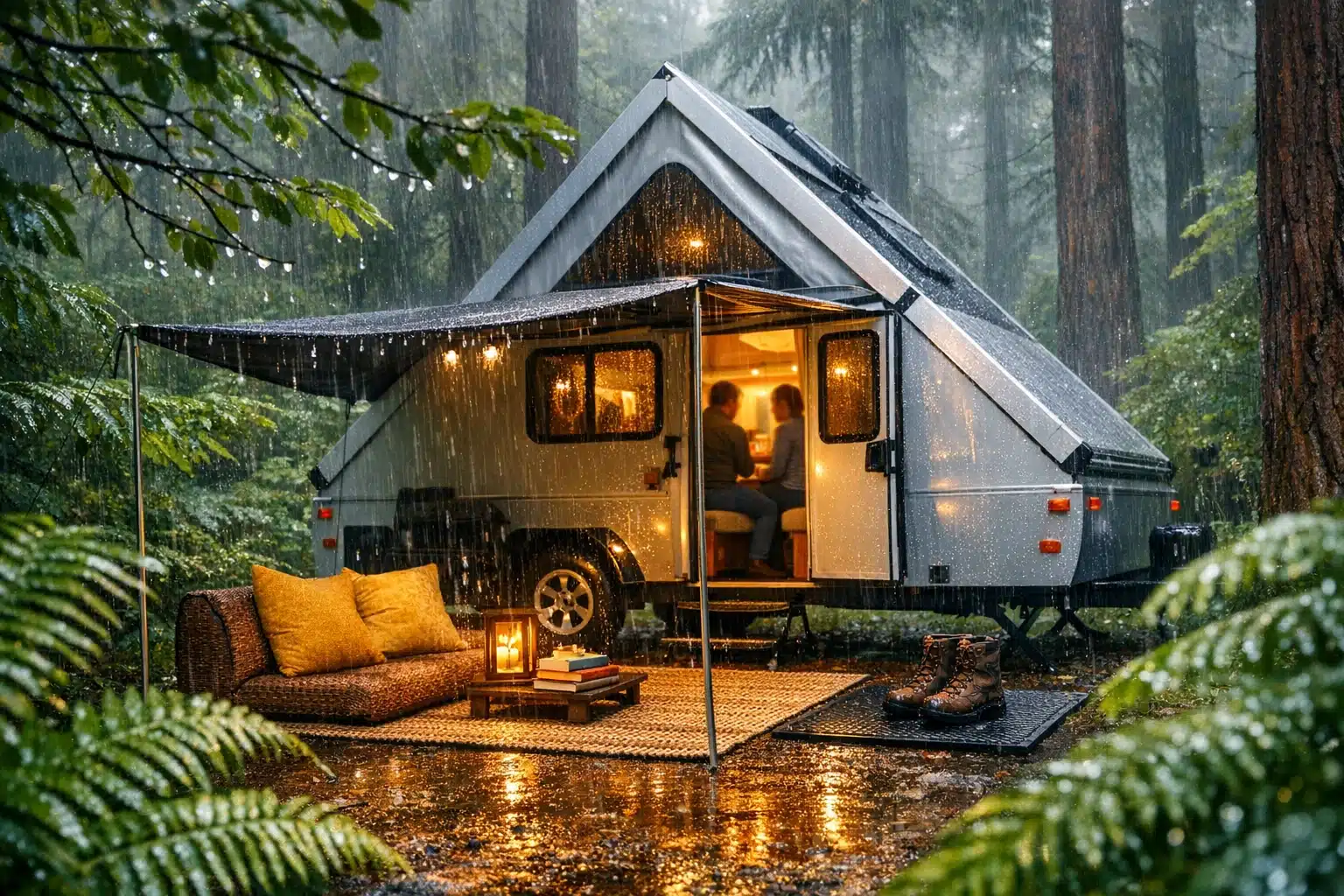
Pop-up campers and hard-sided A-frame trailers offer a different trade-off. They can fold down for lower towing height and easier storage, then open into a roomier campsite footprint. Pop-ups often provide generous sleeping space at a lower cost than hard-sided trailers, which makes them appealing for budget-conscious buyers. A-frame campers add quicker setup and more rigid walls. The compromise is insulation, security, and convenience. Canvas-sided pop-ups, in particular, can be less comfortable in cold, wind, or sustained rain, and setup takes more effort than simply parking and leveling a small travel trailer.
Compact travel trailers, often in the 13- to 20-foot range, are where many couples find the best balance. These units can include a fixed bed, a dinette, an indoor kitchenette, heating, air conditioning, and sometimes a wet bath. Dry weights commonly start around 2,000 pounds and rise well beyond 3,500 pounds depending on construction and equipment. Molded fiberglass campers sit within this broader compact category but are worth special attention because their shells are durable, relatively resistant to leaks when well built, and often designed efficiently. They usually cost more up front, yet many buyers value the long service life and tidy, easy-to-clean interiors.
A practical comparison looks like this:
– Teardrop: light, stylish, simple, but limited indoor living
– Pop-up: roomy for the money, but more setup and less weather isolation
– A-frame: easier than a pop-up, still compact, often narrow inside
– Small travel trailer: strongest all-around comfort, but heavier and usually pricier
– Molded fiberglass: durable and efficient, though often expensive for the size
No format wins universally. The best type depends on whether a couple prioritizes low weight, four-season potential, indoor standing room, outdoor cooking, or ease of storage at home. Think of the categories as personalities rather than rankings. One feels like a clever tent replacement. Another behaves like a miniature apartment on wheels. The right one is the one that matches the rhythm of your trips.
The Layout Details That Matter Most When Two People Share a Small Space
Once a couple narrows the camper type, layout becomes the deciding factor. In a compact trailer, a few inches can change everything. A bed that is easy to access, a door that does not block movement, or a refrigerator placed where both people can reach it without choreography can make the difference between a delightful weekend and a mildly comic domestic obstacle course. Small campers are not simply about square footage; they are about how intelligently that square footage is used.
The sleeping arrangement deserves the closest attention. Many compact models offer a fixed full or queen bed, while others convert a dinette each night. A fixed bed saves time and reduces friction, especially for couples with different sleep schedules. One person can rest while the other reads, works, or makes coffee. Convertible beds free up floor space during the day but add a daily setup task that becomes tiresome on longer trips. Bed access also matters. If one partner must crawl over the other to get out, that may seem acceptable in a showroom and annoying by the third morning.
The kitchen is another make-or-break zone. Some couples love exterior cooking because it keeps smells and mess outside. Others want an indoor galley for cold mornings, windy campsites, and quick roadside meals. Counter space is often scarce, so look for clever details: sink covers, fold-out shelves, a refrigerator that opens fully without blocking the aisle, and enough pantry storage for at least several days. If one person is the main cook, that partner should be able to stand and work without twisting around every cabinet door.
Bathrooms create especially sharp differences in user experience. A wet bath combines shower, toilet, and sink in one waterproof room, saving space but requiring compromise. Some couples are perfectly happy using campground facilities and prefer extra storage instead. Others consider an onboard toilet non-negotiable, especially for overnight stops, remote camping, or travel in poor weather. There is no universal answer, but there is a useful question: will the bathroom make your trips easier often enough to justify the weight, maintenance, and space it takes away from other functions?
Storage, climate control, and power systems also deserve a realistic look. Overhead cabinets can swallow clothing but may feel cramped. Under-bed storage is valuable for bedding and bulky gear. Exterior pass-through compartments are useful for hoses, tools, leveling blocks, and chairs. Heating extends the season, while air conditioning matters in humid or very warm regions. Solar panels, lithium batteries, and larger freshwater tanks help couples who prefer dispersed camping or campgrounds without hookups.
When evaluating a layout, check these details closely:
– Can both people move around the bed without frustration?
– Is there a comfortable place to sit inside during rain?
– Does the kitchen support the way you actually cook?
– Is there enough storage for clothes, shoes, food, and outdoor gear?
– Can you imagine a three-day trip and a three-week trip in the same space?
A small camper works best when it supports the little rituals of traveling together: passing a mug across the counter, stepping in out of the wind, reading while rain taps the roof, or packing up in ten calm minutes before sunrise. Those scenes are where layout becomes real.
Towing, Budget, and the Real Cost of Owning a Small Camper
One of the biggest mistakes first-time buyers make is focusing on brochure dry weight and overlooking the full towing picture. A camper may look towable on paper, yet become questionable once water, propane, food, clothing, tools, and camping gear are added. Couples should pay attention to several figures: dry weight, gross vehicle weight rating, tongue weight, and the tow vehicle’s payload capacity. Payload is especially important because it includes passengers, cargo in the vehicle, and trailer tongue weight all at once. A trailer that seems light enough can still overload the vehicle if those numbers are ignored.
As a rough guide, many teardrops and very small campers can work with lighter-duty vehicles, while compact hard-sided trailers often require midsize trucks, larger SUVs, or carefully matched crossovers with suitable tow ratings. Even when the rating says yes, comfort and confidence matter. A vehicle towing near its limit may struggle more with headwinds, mountain grades, or emergency maneuvers. Wheelbase, braking capability, transmission cooling, and the use of a brake controller can matter as much as the headline tow number. If a couple is new to towing, leaving a healthy margin rather than chasing the maximum is usually the wiser choice.
The purchase price is only the beginning. New small campers can range widely, from relatively simple models around the lower five figures to premium compact units that move well beyond that. Used campers may offer better value, but buyers should inspect them carefully for water intrusion, soft flooring, roof damage, sealant neglect, appliance failures, rust on the frame, and aging tires. A lower sticker price can hide expensive repairs. Water damage is particularly important because it can spread silently behind walls and cabinetry.
Ownership costs also include insurance, registration, winterizing supplies, maintenance, storage fees if the camper cannot stay at home, campground costs, and accessories many owners eventually buy. These add-ons often include:
– leveling blocks and wheel chocks
– sewer and freshwater hoses
– surge protection or electrical adapters
– wheel covers, stabilizers, and tongue locks
– cookware, bedding, and outdoor chairs
– solar upgrades, batteries, or bike racks
Fuel economy should be considered honestly as well. Even a lightweight trailer changes aerodynamics, and boxier models create more drag than low-profile designs. Long highway trips may cost noticeably more in fuel than tent camping or staying in a small cabin. That does not make ownership a poor value; it simply means couples should compare total travel cost rather than fixating on the initial purchase alone.
The healthiest budget strategy is to set three numbers before shopping: the maximum all-in purchase budget, the annual ownership budget, and the comfortable towing limit of the current vehicle. That framework narrows the field quickly and prevents a common problem: falling for a camper that is beautiful, affordable on the lot, and inconvenient everywhere else. The right financial decision is usually the one that keeps travel fun instead of turning every trip into a calculation.
How Couples Can Choose the Right Camper for Their Travel Style
The best small camper is not the one with the flashiest finish or the longest feature list. It is the one that supports the way two specific people move through the world together. A couple that spends days hiking and only returns to sleep may thrive in a simple teardrop or minimalist fiberglass shell. A pair that likes slow mornings, long meals, and regular work-from-the-road routines will probably appreciate a roomier travel trailer with a dinette, indoor kitchen, and stronger power setup. Someone who loves remote backroads may prioritize ground clearance and off-grid systems, while another couple may care far more about quick highway overnights near clean campgrounds.
Travel frequency should guide the choice. If the camper will be used six weekends a year, a simpler model with fewer systems may be ideal. If it will support long seasonal tours, comfort and weather resilience deserve more weight. Climate matters too. In hot regions, ventilation and air conditioning may be decisive. In shoulder-season destinations, insulation, furnace performance, and condensation control become more important. Even your packing style tells a story. Minimalists can live happily in a compact shell. Gear-heavy travelers carrying bikes, fishing equipment, photography kits, or climbing gear need better storage planning from day one.
It also helps to think like a team rather than two separate shoppers. One partner may care most about drivability, while the other values interior livability. One may want a bathroom, while the other would trade it for storage or a lighter tow. The best decisions usually come from ranking priorities together. Try a simple method:
– each person lists five must-haves
– each person lists three deal-breakers
– compare the lists and identify what overlaps
– rent or tour similar models before buying if possible
– walk through setup, sleeping, cooking, and rainy-day use in your imagination
Renting before buying can be especially revealing. A single weekend will teach more than hours of online browsing. You will learn whether bed access matters, whether the galley feels usable, whether the storage works, and whether towing feels relaxed or tense. These lessons are much cheaper to learn in a rental than after signing papers.
Conclusion for Couples
For couples, a small camper can be one of the most practical ways to travel farther, stay longer, and keep the trip feeling personal. The sweet spot usually lies where comfort, towability, and budget meet without strain. A tiny trailer that is effortless to use will often deliver more real joy than a larger model that adds cost, stress, or constant compromise.
If you are choosing now, start with how you travel instead of what looks impressive in a listing. Be honest about your vehicle, your budget, your tolerance for setup, and the amount of indoor space you need when weather turns. When those answers are clear, the field of options becomes far less confusing. The right camper for two is not merely a product; it is a compact basecamp for shared mornings, changed plans, scenic detours, and the kind of trips that are remembered long after the wheels stop turning.