Discover compact campers
Compact campers have changed the way couples approach road travel by making mobility, comfort, and lower running costs easier to balance. Instead of wrestling with a large rig, travelers can slip into smaller campsites, city parking areas, and winding scenic roads with far less stress. That flexibility matters for weekend escapes as much as for longer tours across states or coastlines. If you want a practical home base that still feels adventurous, this guide will help you see what these scaled-down trailers and vans can really offer.
Outline
- What compact campers are and why they appeal to couples
- Interior layouts, comfort features, and everyday livability
- Towing, driving, setup, and travel efficiency
- How to choose the right model for budget and travel style
- Ownership realities, maintenance, and a practical conclusion
What Makes Compact Campers So Appealing for Two
Compact campers sit in a sweet spot between a tent and a large motorhome. They are small enough to feel approachable, yet substantial enough to provide shelter, a bed, basic cooking space, and often climate control. For couples, that balance can be especially attractive because two people usually do not need a giant living room on wheels. What they need is a reliable, comfortable base that lets them wake up near a trailhead, a lake, a national park, or a quiet coastal road without turning every travel day into a logistical puzzle.
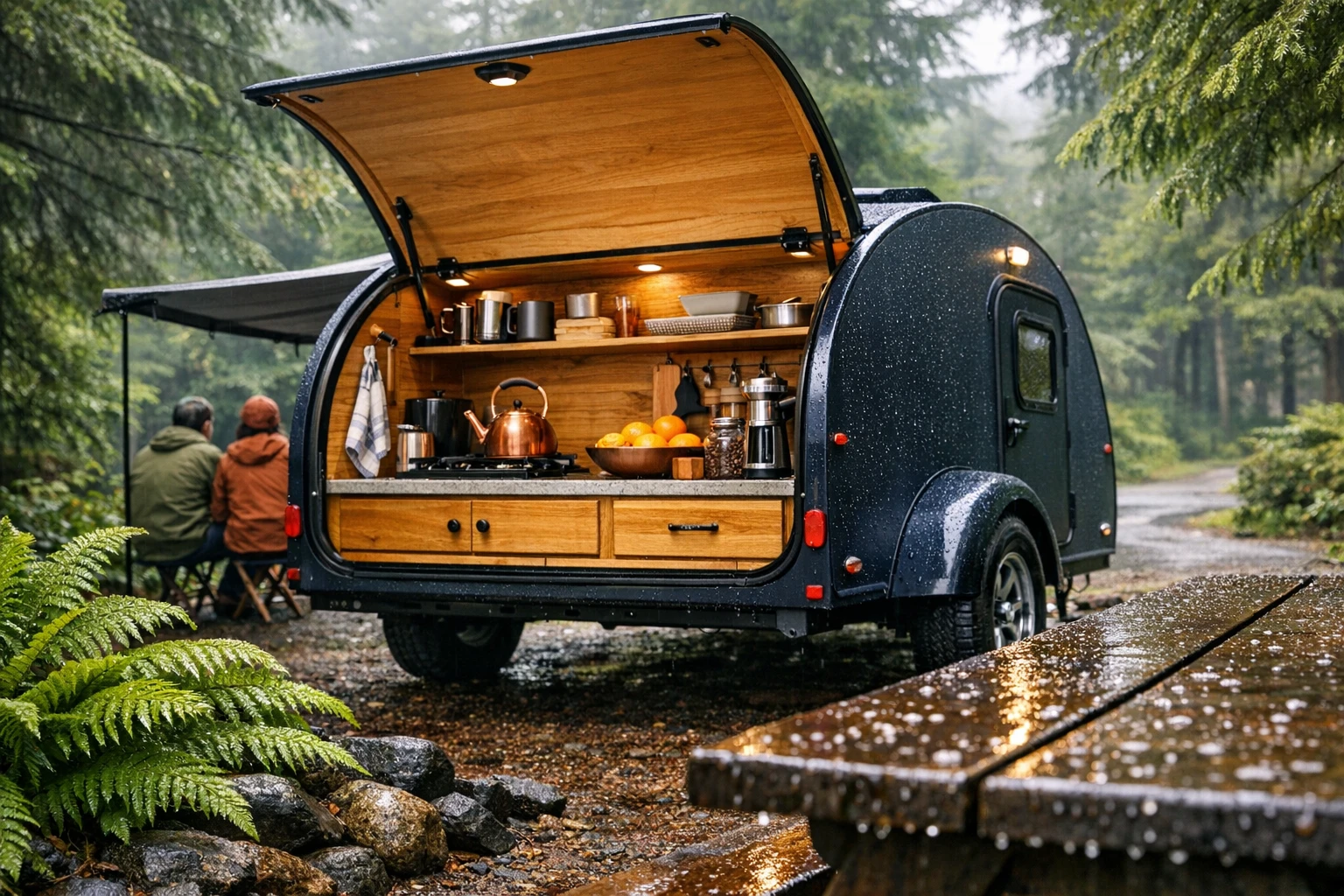
In practical terms, compact campers include several formats. Teardrop trailers are among the smallest and lightest, often featuring a sleeping cabin and an outdoor rear galley. Small travel trailers add standing room, indoor seating, and more storage. Pop-up campers fold down for easier towing and garage storage, then expand at the campsite. Class B camper vans package everything into one vehicle, giving drivers an all-in-one solution that works well for frequent movement. Each option has a different personality, but the shared promise is similar: easier travel with fewer compromises than most first-time buyers expect.
Couples often choose small campers because the scale reduces friction. A shorter trailer is easier to tow, back into place, and store at home. A smaller van is easier to maneuver in towns, scenic overlooks, and fuel stations. Campground options can open up too, because many older sites were not designed for oversized rigs. That detail matters more than many shoppers realize. If a beautiful campground has narrow roads or tight spaces, compact size becomes a real advantage rather than a marketing buzzword.
There is also a financial dimension. While prices vary dramatically by brand, build quality, and included systems, compact campers generally cost less to buy, insure, fuel, and maintain than larger RVs. That does not make them cheap by default, but it does mean many couples can enter RV travel without committing to the expense of a full-size setup. Common benefits include:
- Lower towing weight or easier drivability
- Reduced fuel consumption compared with larger RVs
- Faster setup and breakdown at camp
- Access to more campsites and parking situations
- Simpler cleaning and upkeep after a trip
Emotion plays a role as well. A compact camper can make travel feel intimate and intentional. You pack what matters, leave behind what does not, and build days around places rather than possessions. For many couples, that rhythm is the real luxury. It turns the road into part of the experience instead of just the stretch between destinations.
Layout, Comfort, and the Features That Matter Most
Shopping for a compact camper is not only about dimensions or weight ratings. Interior design matters just as much, especially when two people will share the space for several nights in a row. The smartest layouts make every square foot work hard. A dinette may convert into a bed, a countertop may extend with a flip-up panel, and storage may hide under benches, above the sleeping area, and inside exterior hatches. Good design can make a 16-foot trailer feel surprisingly capable, while poor design can make a much larger unit feel cramped and frustrating.
Discover compact campers perfect for two—features, comfort, and travel ease. That phrase sounds promotional at first glance, yet it captures a real checklist couples should use when evaluating a model. Start with the bed. Is it permanently set up, or will you need to rebuild it from cushions each night? Permanent beds are easier for daily comfort, but convertible beds free up daytime floor space. Next, consider seating. On rainy days, two adults need a place to read, eat, plan routes, or work on a laptop without sitting shoulder to shoulder in awkward silence.
Kitchens vary widely. Teardrops often rely on outdoor cooking areas, which many travelers love in mild weather. Small travel trailers and vans may include a two-burner stove, compact sink, small refrigerator, and modest pantry storage. That can be enough for coffee, breakfast, and simple dinners, but only if the workflow makes sense. Ask where the cutting board goes, where plates are stored, and whether the fridge is accessible during travel stops. Tiny inconveniences add up fast on the road.
Bathrooms are another major divider. Some couples are comfortable using campground facilities, portable toilets, or cassette systems. Others strongly prefer a wet bath or enclosed toilet area for privacy and flexibility. Neither preference is wrong, but it should be honest. Buying a beautiful camper that does not match your real habits can turn a dream purchase into a compromise you notice every morning.
Comfort features worth comparing include:
- Insulation quality for hot and cold weather travel
- Ventilation through roof fans and screened windows
- Heating and air conditioning options
- Fresh water and gray water capacity
- Solar panels, battery size, and off-grid power capability
- Interior headroom and ease of movement
Storage deserves special attention because two people bring more than clothes. Shoes, jackets, chargers, camp chairs, food, toiletries, and bedding all need a home. Well-placed compartments keep the cabin calm. Poor storage makes the space feel chaotic after one night. When you step inside a camper, imagine not the showroom but the third day of a trip, after groceries, hiking gear, and damp towels have entered the scene. That thought experiment reveals more than glossy brochures ever will.
Towing, Driving, Setup, and Real Travel Efficiency
One of the strongest arguments for compact campers is that they reduce the physical and mental effort of travel days. A small trailer can often be towed by a broader range of vehicles than a large RV, though buyers must always verify tow rating, payload, hitch limits, and braking requirements rather than assume compatibility. Many teardrop trailers weigh roughly 1,000 to 2,000 pounds, while small travel trailers may start around 2,500 pounds dry and climb well above that once loaded. Pop-ups can be relatively light, and Class B camper vans typically eliminate the towing question entirely because the living space is built into the vehicle.
Efficiency is not only about fuel. It is also about time. A compact setup can be parked faster, leveled faster, cleaned faster, and prepared for departure with fewer tasks. That makes spontaneous travel easier. If a storm rolls in or you decide to chase better weather, moving camp can feel manageable instead of exhausting. For couples who like multi-stop itineraries, that agility can be a deciding factor.
Driving and towing differences shape the experience in important ways. A van is convenient for quick lunch breaks, stealthier urban stops where legal, and easier access to interior amenities during roadside breaks. A trailer gives you the freedom to unhitch at camp and use the tow vehicle independently, which many travelers prefer for grocery runs, scenic drives, or day hikes. The trade-off is that towing requires confidence with mirrors, turning radius, braking distance, and backing technique. None of that is impossible to learn, but it does deserve respect.
Compact campers also work well with the realities of modern campgrounds. Smaller footprints can fit into older state park sites, forest campgrounds, and basic private campgrounds more easily than long rigs. Setup often involves fewer slide-outs, fewer utility connections, and less leveling complexity. In mild conditions, a teardrop or pop-up can turn campsite setup into a fifteen-minute ritual instead of a chore that absorbs the late afternoon.
When comparing travel efficiency, it helps to ask specific questions:
- How long does arrival-to-relaxation typically take?
- Can one person handle setup if the other is tired?
- How stressful is refueling or navigating a small town?
- Will the unit fit in the places you actually want to visit?
- How much packing discipline does the layout require?
There is a quiet pleasure in an easy travel day. You pull over by a wide valley, make coffee, watch the light move across distant hills, and continue without wrestling with a machine that feels larger than your plans. That is where compact campers shine. They do not remove every challenge, but they often make the journey feel lighter, more fluid, and far more welcoming to newer travelers.
How to Choose the Right Compact Camper for Your Style and Budget
The right compact camper depends less on trends and more on how you actually travel. Some couples leave on short weekend trips and value quick setup above all else. Others disappear for two-week tours and need more storage, a larger refrigerator, and enough battery power to camp without hookups. A pair of hikers may love a rugged teardrop with an outdoor galley, while a couple working remotely may need a dinette, multiple charging points, and strong ventilation for long afternoons inside. The best buying decision starts with honest self-observation rather than a flashy floorplan.
Explore small campers for couples as a category, and you will see a broad spectrum of prices and capabilities. On the lower end, used pop-ups and older teardrops can offer a relatively affordable entry point. Newer molded-fiberglass trailers, premium teardrops, and well-equipped small travel trailers usually cost more but may deliver better insulation, stronger resale value, and cleaner fit and finish. Class B camper vans often sit at the top of the price range because the vehicle and living space are integrated, and modern van conversions can become expensive quickly. Insurance, storage, taxes, registration, and upgrades should be part of the calculation from the beginning.
Start your evaluation with non-negotiables. Do you need a bathroom? Do you want to stand up inside? Must the unit fit in a home garage? Are you comfortable cooking outside in wind or cold? Will your current vehicle tow it safely with passengers and gear on board? Once those answers are clear, compare candidates through a realistic lens. A practical shortlist often becomes obvious once you stop imagining every possible trip and focus on the trips you will actually take in the next two years.
It helps to break the decision into categories:
Budget: Look beyond sticker price and include gear, hitch equipment, maintenance, and campground patterns.
Climate: Four-season claims vary, so assess insulation, plumbing protection, and heating performance carefully.
Trip length: A weekend unit can feel cramped on a ten-day trip if storage and seating are limited.
Sleeping comfort: Mattress quality, bed dimensions, and ease of nighttime access matter more than showroom lighting.
Payload and tow safety: Loaded weight matters more than brochure dry weight.
Renting before buying is often the smartest step, especially for first-time shoppers. A few weekends in different formats can reveal whether you prefer the independence of a trailer or the simplicity of a van. Visit dealerships, RV shows, and owner forums with a notebook, not just a camera. Open every cabinet, sit at the table, lie on the bed, and imagine a rainy afternoon indoors. The right camper should fit your habits with calm competence, not require you to become a different person to enjoy it.
Living With a Compact Camper: Costs, Care, and a Smart Conclusion
Owning a compact camper is rewarding, but it works best when enthusiasm is matched by realistic planning. Even a small unit needs regular care. Tires age out, seals need inspection, batteries need attention, and water systems should be winterized in cold climates. Roof maintenance matters on trailers and pop-ups, while vans bring vehicle servicing into the equation as well. None of this is unusual, but it does mean the purchase is not finished when you drive away. A compact camper is less demanding than a large rig in many cases, yet it still benefits from routine habits that protect value and reliability.
Budgeting should include more than the obvious monthly payment, if there is one. Storage can be free if the camper fits on your property, but paid storage adds a recurring cost in many areas. Campsite fees range from basic public land rates to resort-style prices with hookups and amenities. Fuel spending depends on route, terrain, weather, and driving style. Accessories also add up quickly: leveling blocks, hoses, surge protection, wheel chocks, bedding, cooking tools, and solar upgrades can turn a modest purchase into a larger investment. The good news is that many of these are one-time expenses, and careful buyers can spread them out over time.
For couples, the day-to-day reality matters just as much as the budget. Shared space rewards communication. One person may care more about a tidy galley, while the other may prioritize an easy bed setup or quick access to outdoor gear. Successful trips often come down to rhythm: who packs what, who checks the hitch, who handles meals, who watches the clearance when backing into a site. Compact camping tends to work best when both travelers understand the system and contribute to it. A few simple routines can keep the experience pleasant:
- Pack only multi-use gear and review what goes unused after each trip
- Keep a departure checklist for utilities, hatches, and loose items
- Inspect seals, tires, and brakes on a regular schedule
- Store essential tools and spare fuses in one dedicated location
- Test short trips before planning a long tour
For the target audience here, the value of a compact camper is clear. If you are a couple that wants freedom without the burden of managing a huge RV, this format offers a practical, flexible path into road travel. You gain easier movement, simpler setup, and a stronger chance of using the camper often rather than occasionally. The best model is not the one with the longest feature list; it is the one that matches your road habits, your budget, and the way you like to spend time together. Choose with care, travel with curiosity, and a compact camper can become less of a possession and more of a passport to weekends that feel larger than the map suggests.