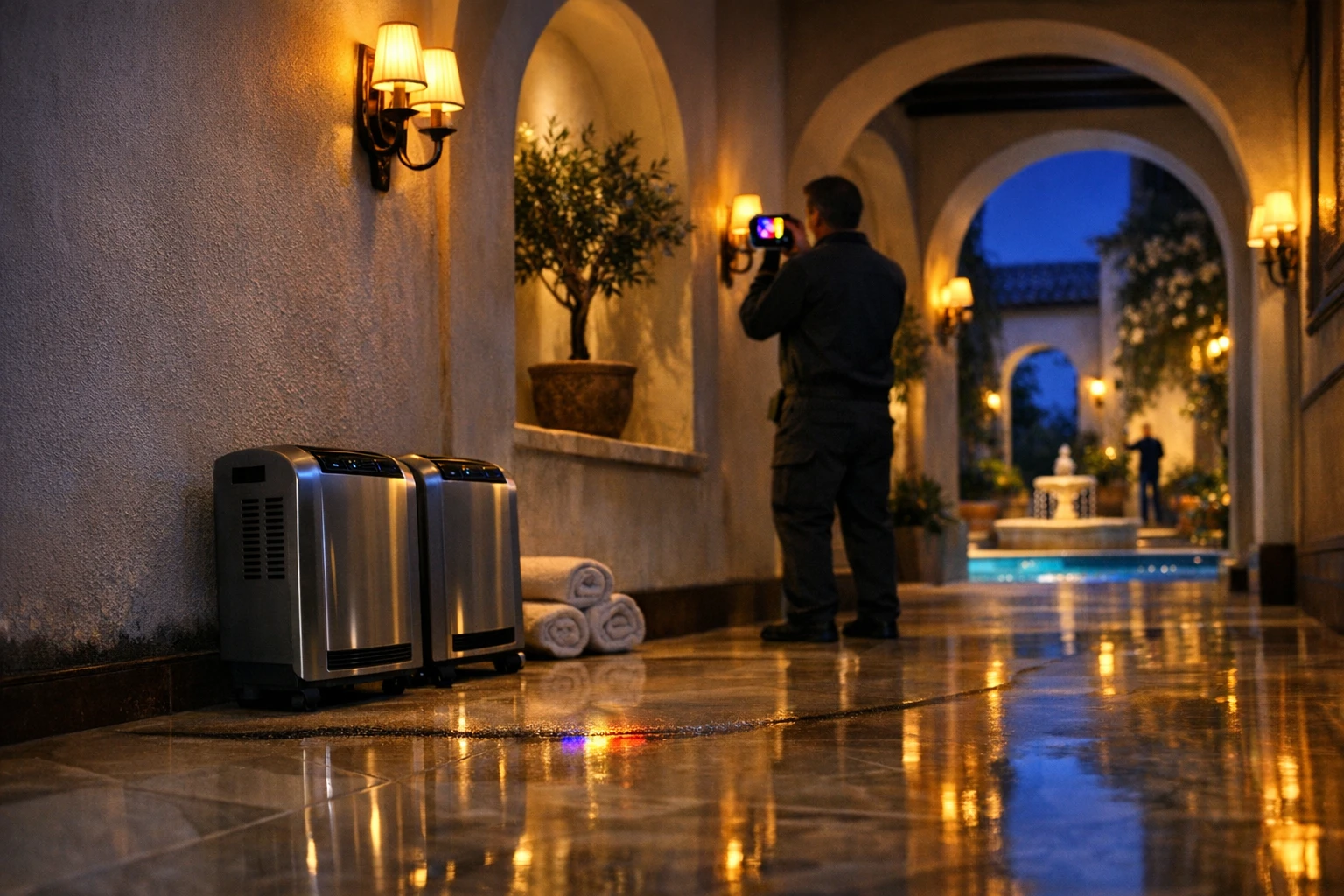
Emergency Plumbing
Water has a quiet way of turning a small household problem into a costly repair, especially when a pipe bursts at midnight or a slow leak hides behind a wall for months. Emergency plumbing, leak detection, and moisture detection all deal with the same basic truth: damage grows in the dark and in the delay. Knowing what to look for, what tools matter, and when to call a professional can protect floors, walls, wiring, and indoor air quality. This guide explains the practical side of fast response and smart prevention.
Outline
This article begins by explaining what makes a plumbing problem an actual emergency and why the first hour often matters most. It then looks at leak detection, including visible warning signs, meter tests, acoustic tools, infrared imaging, and other methods used to find hidden water loss. After that, it covers moisture detection, with a focus on how professionals measure dampness inside walls, flooring, wood, and concrete after a leak or flood. The fourth part compares do-it-yourself checks with professional intervention, showing where homeowner action is useful and where expert help becomes essential. The final section brings everything together with a practical conclusion and prevention plan aimed at homeowners, renters, and property managers who want fewer surprises and faster recovery.
When Plumbing Becomes an Emergency
Not every plumbing issue deserves a midnight callout, but some situations move from inconvenient to urgent with surprising speed. A dripping faucet can usually wait for an appointment. A burst supply line, overflowing toilet that will not stop, sewage backup, or failed water heater leaking onto finished flooring is another story entirely. The simplest way to define an emergency is to ask three questions: Is water actively escaping, is health or safety at risk, and will delay make the damage much worse? If the answer is yes to any of those, the problem deserves immediate action.
Time matters because water travels fast and settles into places that are expensive to repair. It seeps beneath laminate, softens drywall, stains ceilings, loosens tile adhesive, and can reach electrical components. Restoration professionals often note that mold growth becomes more likely when damp materials stay wet for 24 to 48 hours. That does not mean every leak becomes a mold crisis, but it does explain why prompt shutdown and drying are so important. In a sense, plumbing emergencies are less about drama and more about momentum. A small failure allowed to continue often becomes a much larger repair project.
Common emergency scenarios include:
- Burst or frozen pipes
- Overflowing toilets that do not respond to shutoff attempts
- Sewage backups from drains or floor traps
- Water heater tank leaks
- Sump pump failure during heavy rain
- Major loss of water pressure caused by a broken line
The first response should be calm and mechanical rather than improvised. Shut off the nearest fixture valve if possible. If that does not stop the flow, use the main water shutoff for the building. Turn off electricity to affected areas only if it can be done safely from a dry location. Move rugs, boxes, electronics, and furniture away from the wet zone. Take photos early, especially if insurance documentation may be needed later. A wrench by the main shutoff is not glamorous, but in a real emergency it can be more valuable than a toolbox full of gadgets.
There is also an emotional side to emergency plumbing. People often hesitate because they hope the issue will settle down on its own. Usually it does the opposite. A practical rule is simple: if water is escaping where it should not, or wastewater is returning where it definitely should not, treat the event seriously. Fast action reduces material loss, lowers drying costs, and gives professionals a better chance of limiting structural damage. The most useful mindset is not panic, but sequence: stop the water, protect the space, document the problem, and then bring in the right help.
Leak Detection: From Visible Clues to Specialized Tools
Leak detection sits at the crossroads of observation and technology. Some leaks announce themselves with a ceiling stain, peeling paint, or a steady hiss in the wall. Others are subtle enough to pass for seasonal humidity or an unusually high utility bill. The challenge is that visible water is often late evidence. By the time a floorboard darkens or drywall bubbles, moisture may have been spreading for days or weeks. That is why leak detection is less about spotting puddles and more about tracing patterns.
A good starting point is the water meter. If every fixture and appliance in the building is off but the meter continues moving, there may be a hidden leak. This old-school test remains useful because it measures actual water loss rather than symptoms. The U.S. Environmental Protection Agency has estimated that household leaks can waste nearly 10,000 gallons of water per year in an average home, and even a drip of about one drop per second can waste more than 3,000 gallons over a year. Those numbers help explain why a leak is not only a repair issue but also an operating-cost issue.
Professionals usually combine several methods rather than relying on one magical device. Common approaches include:
-
Visual inspection for staining, corrosion, warped surfaces, and mineral buildup
-
Acoustic listening equipment that amplifies the sound of water escaping under pressure
-
Pressure testing to identify whether a line is losing pressure over time
-
Infrared imaging to locate temperature differences that can suggest hidden moisture or cold-water movement
-
Video pipe inspection for drain lines, especially when a blockage or break is suspected
-
Tracer gas testing in certain hard-to-find situations, such as slab leaks
Each method has strengths and limits. Acoustic tools work well on pressurized supply lines but are less helpful when environmental noise interferes or when pipe material dampens sound. Infrared cameras are valuable because they are non-invasive, yet they do not detect water directly; they detect temperature differences, so interpretation matters. Pressure tests can confirm a problem but not always pinpoint the exact location. Video inspection is excellent for drains, but it will not solve every mystery inside a closed wall cavity. The best technicians think like investigators, layering evidence until the leak location becomes clear.
Consider a slab leak beneath a ground-floor room. A homeowner may notice warm spots on the floor, a sudden jump in the water bill, and reduced pressure at fixtures. A plumber might isolate the line, test pressure, scan with thermal imaging, and then confirm the likely break zone before opening a small targeted area instead of demolishing an entire room. That is the value of modern leak detection: not just finding a problem, but finding it with less collateral damage. Good detection saves water, limits repair scope, and turns guesswork into a controlled process.
Moisture Detection: Finding the Damage That Water Leaves Behind
Leak detection answers one question: where is the water coming from? Moisture detection answers a different and equally important one: where has that water gone? This distinction matters because a repaired pipe does not automatically mean the building is dry. Water can remain trapped in insulation, subfloors, framing, cabinetry, and concrete long after the visible leak stops. That hidden dampness is what leads to swelling, odor, microbial growth, and material failure that appears days later, almost as if the building is revealing a second chapter of the same story.
Moisture detection is especially important after emergency plumbing events, slow wall leaks, appliance failures, roof intrusions, and bathroom seepage. Professionals use multiple instruments because materials hold and release moisture differently. Drywall, hardwood, concrete, and carpet padding do not behave the same way, so no single reading tells the whole story. The goal is usually to create a moisture map: a record of what is wet, how wet it is, and whether conditions are improving during drying.
Common moisture detection tools include:
- Pin moisture meters, which penetrate material and provide direct readings
- Pinless moisture meters, which scan surfaces without leaving holes
- Hygrometers and thermo-hygrometers to measure ambient humidity and temperature
- Infrared cameras to highlight cooler areas that may indicate evaporation or dampness
- Borescopes for limited wall-cavity viewing through small openings
- Data loggers to track changes in humidity over time
Interpretation matters as much as the tools themselves. Wood, for example, naturally contains some moisture, but readings that remain elevated for too long can signal trouble. In many indoor conditions, keeping relative humidity roughly in the 30 to 50 percent range is often recommended for comfort and moisture control, although ideal levels vary by climate and season. Wood moisture content above roughly 16 to 20 percent can increase the likelihood of mold or distortion if the dampness persists. Concrete adds another layer of complexity because it can feel dry at the surface while still releasing moisture underneath flooring.
A common example is a shower or tub area where grout looks fine, but the wall behind it tells another story. Paint may stay intact while the bottom plate of the wall becomes damp, the subfloor softens, and a musty smell appears outside the bathroom. Moisture detection helps reveal the spread without immediately removing large sections of tile or drywall. It also helps determine whether drying alone is enough or whether materials have deteriorated beyond recovery.
For homeowners, the practical lesson is straightforward: visible dryness is not reliable proof of a dry structure. For contractors and property managers, documented moisture readings provide a basis for deciding when to remove materials, when to run dehumidifiers, and when a space is actually ready for repair. Moisture detection is the quiet science that prevents a quick patch from turning into a recurring problem.
DIY Checks vs Professional Help: Knowing the Limits During a Water Event
Homeowners and tenants can do quite a lot in the first stage of a plumbing incident, but there is a clear point where professional help becomes the safer and more economical choice. The trick is knowing where that line sits. A person with basic household knowledge can shut off the water, place towels or buckets, run a simple meter test, inspect exposed supply hoses, and photograph damage. Those actions are helpful because they slow loss and preserve information. What they usually cannot do is reliably locate a concealed failure inside a wall, evaluate moisture migration inside a floor assembly, or determine whether a drain problem involves a local clog or a deeper line defect.
DIY assessment works best when the problem is visible and isolated. If a washing machine hose has split, the source is obvious. If a sink trap is leaking into the vanity, the repair may be straightforward. Once the symptoms become indirect, however, professional diagnosis is often worth the cost. Intermittent pressure loss, a warm patch on the floor, repeated ceiling stains, unexplained musty odors, or a meter that moves when all fixtures are off usually call for a more systematic approach.
Professional involvement becomes especially important when:
- Water is near outlets, panels, or wiring
- Sewage or graywater contamination is present
- The leak may be under a slab or behind finished surfaces
- Materials have been wet for more than a day or two
- There is visible structural swelling, sagging, or soft flooring
- Insurance documentation may affect claim approval
It also helps to understand that “professional” may mean different people. A licensed plumber repairs the piping system and locates many leaks. A leak detection specialist may focus on pinpointing hidden failures with acoustic, pressure, or thermal methods. A restoration contractor or drying specialist measures moisture spread, sets drying equipment, and tracks progress. On more complex jobs, these roles overlap and coordinate. That cooperation is often what keeps a repair from becoming a cycle of patch, repaint, and repeat.
Documentation is another area where professionals add value. Clear notes, moisture readings, photos, and repair reports can help property owners speak more effectively with insurers, landlords, or building managers. For renters, the best immediate move is usually to notify the landlord or maintenance team in writing, protect personal belongings, and keep a record of visible damage. For small businesses, fast response matters not only for the building but for downtime, customer safety, and inventory.
The sensible rule is this: use DIY effort for control and observation, not for risky guesswork. When the issue is hidden, contaminated, electrically hazardous, or potentially widespread, trained help is not a luxury. It is the shortest route to a smaller problem.
Conclusion: A Practical Water-Damage Strategy for Homeowners and Property Managers
For most people, emergency plumbing is not a topic they want to study in depth until water is already somewhere it should not be. That is exactly why a simple plan matters. Homeowners, renters, and property managers do not need to become plumbing experts, but they do benefit from understanding the sequence: stop active flow, identify the likely source, assess hidden moisture, and move quickly before damage spreads. Once you see emergency plumbing, leak detection, and moisture detection as connected parts of one process, the situation feels less chaotic and more manageable.
The most effective long-term protection usually comes from routine attention rather than dramatic upgrades. A building that receives periodic inspection gives fewer unpleasant surprises. Supply hoses age quietly. Caulk and grout deteriorate slowly. Water heaters rarely fail on a convenient schedule. Small warning signs often appear before large losses, but only if someone knows to notice them.
A practical prevention checklist includes:
- Learn the location of the main water shutoff and label it clearly
- Inspect appliance hoses, shutoff valves, and visible pipe joints regularly
- Replace aging braided hoses and worn seals before they fail
- Insulate vulnerable pipes in cold areas
- Use leak alarms or smart water sensors near water heaters, sinks, and laundry equipment
- Address minor stains, odors, or pressure changes before they become major repairs
- Schedule professional inspection when symptoms repeat without a clear cause
For landlords and property managers, the strategy should also include unit access procedures, valve maps, emergency contact lists, and clear reporting instructions for tenants. For homeowners, keeping basic supplies nearby such as towels, a bucket, a wrench for shutoff access, and the number of a trusted plumber can make the first half hour far more efficient. For renters, rapid written notification and careful photo records are often just as important as cleanup.
The key takeaway is not that every leak becomes a disaster. It is that fast response and accurate detection reduce uncertainty, waste, and repair costs. Water is persistent, but so is preparation. When you know how emergencies unfold, how leaks are found, and how moisture is measured after the source is fixed, you are in a much stronger position to protect the building and everyone inside it.