A Guide to Small Campers for Couples
Small campers make a lot of sense for couples who want mobility, comfort, and lower travel costs in one manageable package. They are easier to tow, simpler to store, and often flexible enough for everything from quick weekend breaks to long scenic loops. In a market full of oversized RVs and tiny compromises, compact campers sit in the sweet spot. They help two people travel light without giving up the basics that make a trip feel relaxed and enjoyable.
Outline
- Why small campers have become such a strong option for couples
- The main camper types and how they compare in space, weight, and comfort
- Interior layouts and features that matter most when two people share a compact space
- Budget, towing, storage, and ownership costs that shape a realistic buying decision
- How couples can match a camper to their travel habits and choose with confidence
Why Small Campers Work So Well for Couples
Small campers appeal to couples because they solve a common travel problem: how to stay flexible without sacrificing comfort. A large motorhome can feel like overkill for two people, especially if most trips are weekend escapes, regional road tours, or a handful of longer vacations each year. Tent camping, on the other hand, can be fun but less predictable when weather turns cold, rainy, or windy. A compact camper sits neatly between those extremes. It offers a real bed, secure storage, shelter, and often a kitchenette, while still staying small enough to feel practical.
That balance matters more than many first-time shoppers expect. In campground life, size affects nearly everything. A shorter trailer or camper can fit into more campsites, especially in older state parks and national park campgrounds where spots were not designed with giant rigs in mind. Lighter units also place less strain on the tow vehicle and can be less intimidating to reverse, park, and maneuver. For couples who want spontaneous travel, that ease is not a luxury. It is the reason they use the camper often rather than leaving it parked in the driveway.
There are also financial advantages. Small campers usually cost less to buy than large travel trailers or motorhomes, and they often cost less to maintain, insure, and store. Fuel use still rises when towing, but a lighter trailer generally has a smaller impact than a heavy full-size RV. For many households, that difference is what turns camping from an occasional splurge into a realistic habit.
- Lower purchase price than many larger RV categories
- Better fit for smaller campsites and narrower roads
- Less storage space required at home or in paid lots
- Faster setup and easier cleanup after short trips
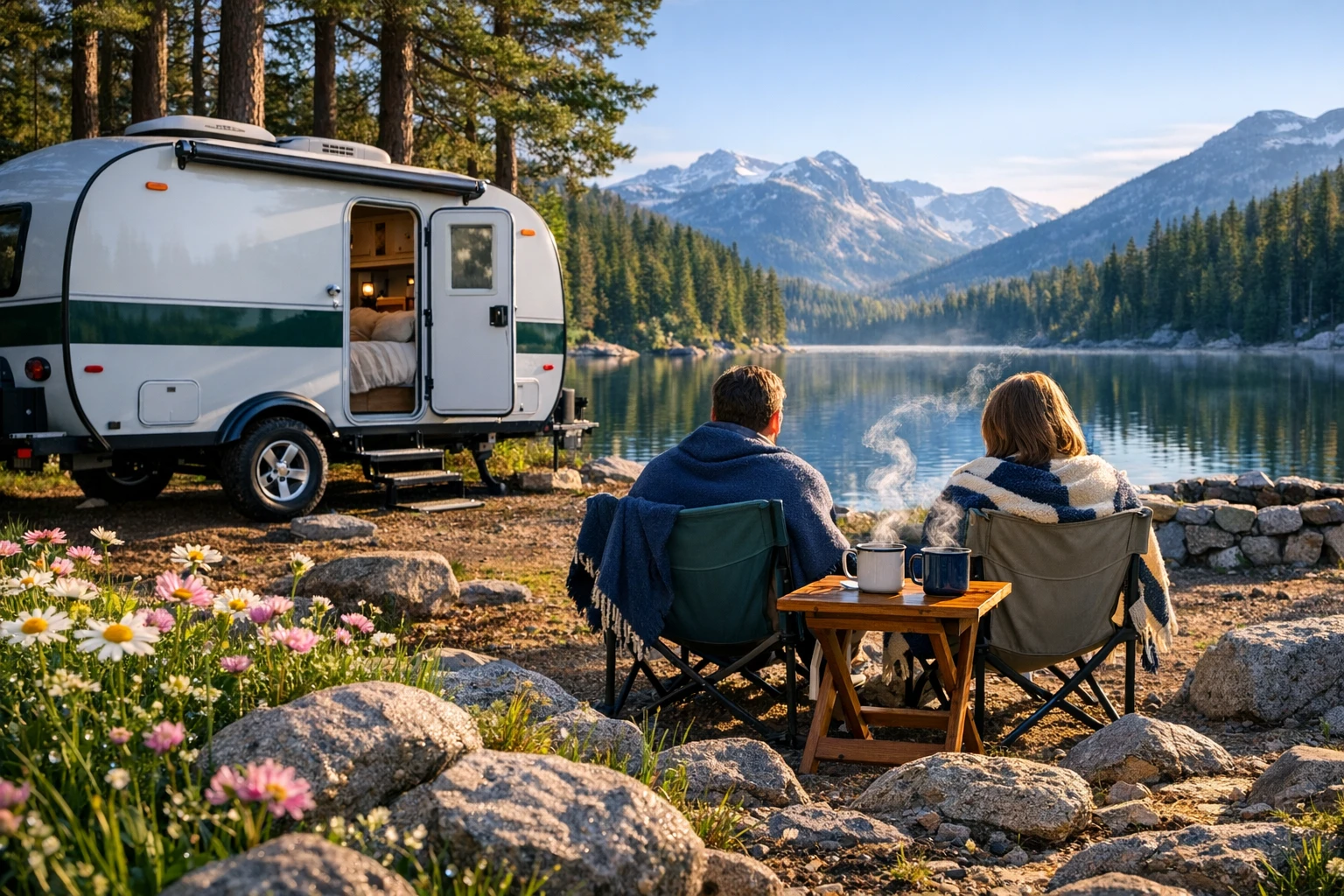
Of course, small does not automatically mean easy. Two people sharing a tight interior need to be honest about routines, storage habits, and privacy expectations. One person may wake early, while the other values uninterrupted sleep. One may love minimalist packing, while the other wants room for hiking gear, coffee tools, and a proper blanket. The strongest small-camper setups are not the ones with the most gadgets. They are the ones designed around how two real people move through a day. When that match happens, a small camper becomes more than a vehicle. It becomes a rhythm: coffee at dawn, windows cracked to the pines, and just enough room to feel sheltered without feeling pinned down.
Comparing the Main Types of Small Campers for Two
Not all small campers are built around the same idea, and couples should compare types before focusing on a specific model. The market usually falls into a few core categories: teardrop trailers, pop-up campers, A-frame campers, compact travel trailers, and camper vans. Each has strengths, and each asks for a different kind of compromise.
Teardrop trailers are among the lightest and simplest choices. Many weigh roughly 900 to 2,000 pounds dry, though larger or better-equipped versions can exceed that. They usually sleep two adults comfortably and often include a rear galley kitchen under a hatch. Their aerodynamic shape can help towing feel smoother, and many can be handled by smaller SUVs, depending on the exact tow rating. The trade-off is interior living space. Some teardrops are basically a mobile bedroom with storage, which works beautifully for couples who spend most of the day outdoors and want only a dry, comfortable place to sleep.
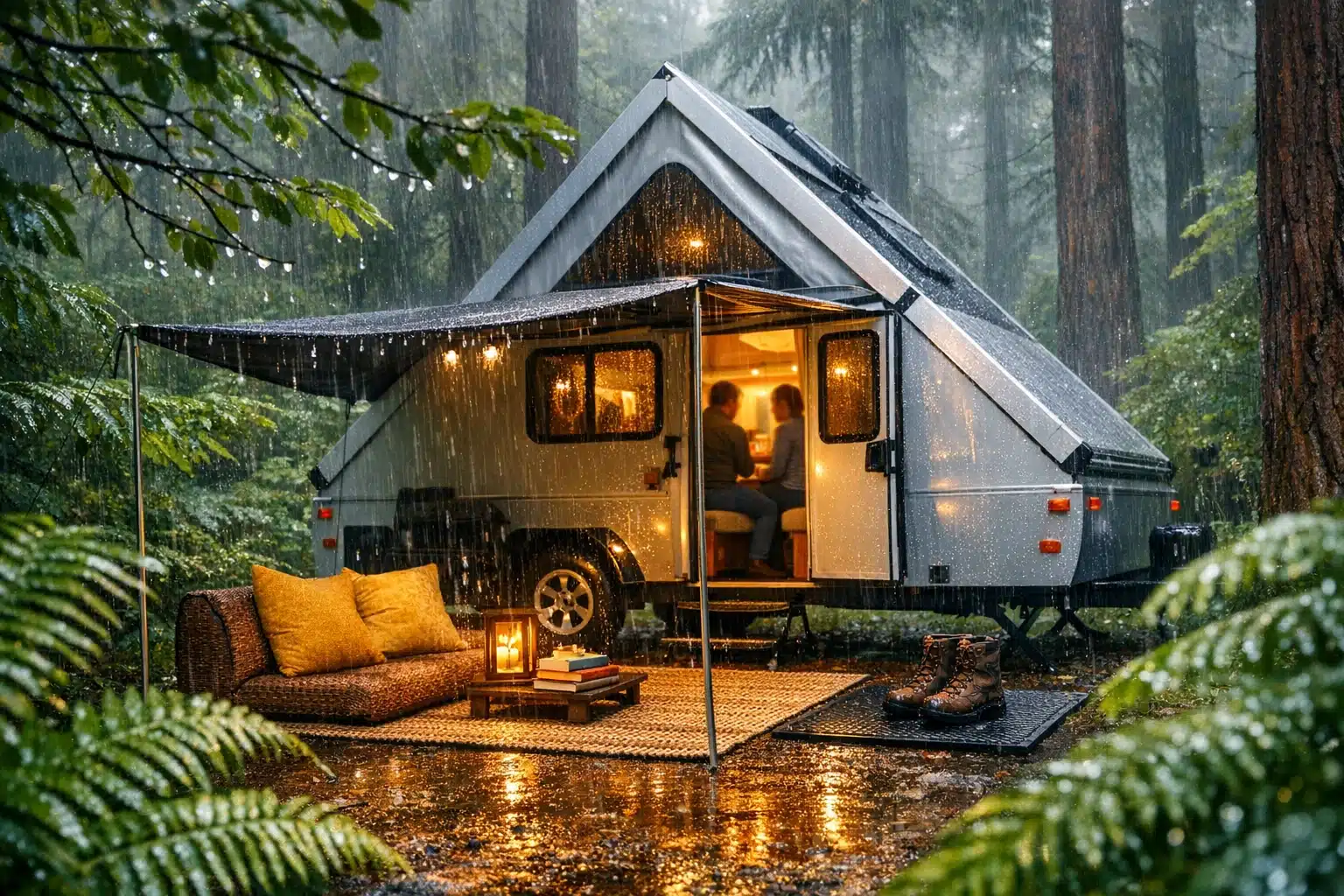
Pop-up campers and A-frame trailers offer a different approach. They collapse for towing and storage, which can reduce wind resistance and make them easier to fit in a garage. Many provide more floor area than a teardrop once opened. Some include small dinettes, compact kitchens, and sleeping zones that feel more open than their towing profile suggests. The downside is setup time and weather sensitivity. Canvas-sided pop-ups, in particular, can feel less insulated in cold temperatures and less secure in prolonged rain than hard-sided units.
Compact travel trailers are often the most balanced choice for couples who want indoor comfort without moving to a large RV. These trailers commonly range from about 14 to 22 feet in overall length and often weigh between 2,000 and 4,500 pounds dry. That range is broad, but it captures why they are so popular. They can include a wet bath or dry bath, a permanent bed, a usable kitchen, heating and air conditioning, and enough storage for longer trips. If a couple plans to travel for a week or more at a time, a compact hard-sided trailer often feels less restrictive than an ultra-minimal option.
Camper vans deserve a place in this discussion too. They remove towing from the equation and make driving, parking, and quick overnights very easy. For road-tripping couples who move often and stay only a night or two in each place, a van can feel wonderfully efficient. However, the price gap is significant. Compact camper vans frequently cost far more than small towable campers, both new and used.
- Teardrop: light, simple, easy to tow, limited indoor living space
- Pop-up or A-frame: roomy for size, good storage profile, more setup required
- Compact travel trailer: strongest comfort-to-size balance, heavier and costlier than minimalist options
- Camper van: excellent mobility, usually the highest purchase cost
The right category depends on how a couple defines comfort. If comfort means a cozy bed and coffee outside, a teardrop may be enough. If comfort means standing room, a bathroom, and rainy-day livability, a small hard-sided trailer usually wins.
Layouts, Beds, Kitchens, and Bathrooms: The Features That Matter Most
For couples, floor plan matters more than raw length. Two campers can measure almost the same from hitch to bumper yet feel completely different in daily use. One may flow naturally, while the other turns every meal, wardrobe change, and midnight bathroom trip into an obstacle course. That is why shopping by square footage alone misses the real question: how well does the layout support two adults sharing one small environment?
The bed is usually the first deciding factor. Many compact campers advertise a queen bed, but dimensions vary. A residential queen is typically 60 by 80 inches, while some RV queens are shorter. Couples should also look at bed access. Corner beds save space, yet the person against the wall may need to climb over their partner. East-west bed layouts can work in short trailers, but taller travelers may find them cramped. A north-south bed with access on both sides takes more room, though it makes everyday living noticeably easier.
The dinette and seating area matter almost as much as the bed. On rainy days, a camper needs to function as more than a sleeping pod. A small two-person dinette can serve as a breakfast nook, workstation, or evening card table. If one partner likes reading indoors while the other cooks, enough elbow room becomes surprisingly important. Good layout design creates separate zones, even when the trailer itself is compact.
Kitchens deserve close inspection too. Some couples are perfectly happy with an outdoor galley and a single-burner stove. Others want an indoor sink, refrigerator, microwave, or two-burner cooktop because they plan longer trips or shoulder-season travel. There is no universal right answer, but there are useful questions:
- Can you prep a simple meal without moving three other items first?
- Is there enough fridge space for two people for several days?
- Are the cabinets deep but practical, or just awkward cavities?
- Will you realistically cook inside, outside, or both?
Bathrooms are another major dividing line. A wet bath combines toilet and shower in one compact waterproof space. It saves room and can be a valuable upgrade for boondocking, cold nights, and early departures. Yet some couples happily skip the bathroom if they mostly use campground facilities. Eliminating it can free up storage and floor area. The right choice depends on travel style, health needs, and how often you camp off-grid.
Ventilation, heating, insulation, and storage should never be afterthoughts. Small campers can get stuffy fast, and poor storage turns packing into a constant puzzle. Look for roof vents, cross-breeze windows, under-bed compartments, and hooks or cubbies that make daily habits easier. The most livable campers are not the flashiest ones on a dealer lot. They are the ones where two people can reach what they need, sit comfortably, and move around each other without friction. In a compact space, thoughtful design is the difference between charming and exhausting.
Budget, Tow Vehicle, and the Real Cost of Ownership
Buying a small camper is not only a design decision. It is also a math problem, and couples are usually best served when they solve that math before falling in love with a floor plan. Sticker price matters, but it is only the opening number. Tow capacity, hitch equipment, insurance, registration, maintenance, storage fees, and camping style all shape the total cost.
New entry-level teardrops and simple pop-ups can start in the lower price ranges of the RV market, while well-equipped compact travel trailers often sit higher because they include bathrooms, climate control, larger tanks, and more appliances. Camper vans usually cost substantially more than towable small campers. Used units can offer better value, but condition varies widely. Water damage, roof leaks, soft floors, aging tires, brake wear, and outdated electrical systems can turn a bargain into a repair project. A professional inspection is often money well spent, especially for buyers who are new to RV ownership.
Towing deserves careful attention. Dry weight is only part of the story. Couples should also review gross vehicle weight rating, cargo carrying capacity, hitch weight, and the tow vehicle’s payload. Once clothing, food, cookware, propane, water, batteries, and outdoor gear are added, actual trailering weight rises fast. Many buyers focus on the trailer brochure and overlook what their vehicle can safely carry in passengers and cargo. That mistake is common, and it can lead to poor handling, longer stopping distances, and a stressful driving experience.
- Verify the vehicle’s tow rating and payload, not just engine size
- Account for loaded trailer weight rather than dry weight alone
- Price essential gear such as brake controllers, sway control, and mirrors
- Include tire replacement, battery upkeep, winterizing, and routine service in the budget
Storage is another practical issue. Some couples can keep a small camper at home, which saves money and encourages spontaneous trips. Others need paid storage, and those monthly fees add up over time. Insurance costs vary by region, unit type, and value, but they should always be part of the ownership calculation.
One useful strategy is to compare ownership with rental use. If a couple expects only one or two short trips a year, renting may be cheaper and simpler. But if they plan regular weekends away plus longer seasonal travel, ownership often starts to make sense. Think of it less as buying an object and more as funding a style of movement. A small camper pays off when it gets used often, fits the tow vehicle without drama, and lets two people travel comfortably enough that they keep saying yes to the next trip.
Conclusion: How Couples Can Choose the Right Small Camper
The best small camper for a couple is rarely the one with the longest features list. It is the one that suits how the pair actually travels. If you love hiking, campfire cooking, and moving often, a light teardrop or streamlined camper van may feel ideal. If you prefer slower stays, mixed weather travel, and indoor comfort at the end of the day, a compact hard-sided trailer with a proper bed, kitchen, and bathroom will likely serve you better. When in doubt, daily habits should decide more than glossy marketing does.
It helps to picture a real trip, not a showroom fantasy. Imagine arriving late in rain. Imagine making breakfast before sunrise. Imagine needing to work for an hour on a laptop, store muddy shoes, or get up at night without waking your partner. Those simple scenes reveal far more than any brochure. A camper for two should support teamwork, not test it. In the best setups, one person can make coffee while the other gets dressed, gear has a home, and small inconveniences do not pile up into tension.
For many couples, the smartest path is to rent before buying. Even one weekend in a teardrop, pop-up, or compact travel trailer can clarify preferences quickly. You may discover that an outdoor kitchen is all you need, or you may realize that standing room and a bathroom are worth every extra pound. Testing removes guesswork and protects the budget.
There is also no shame in choosing simplicity. Bigger is not automatically better, and smaller is not automatically limiting. The real goal is fit. A well-chosen small camper can open national park loops, coastal weekends, mountain mornings, and quiet roadside stops with far less hassle than a large RV. For couples who value freedom, manageable costs, and a shared sense of adventure, that combination is hard to beat.
- Choose by travel style first, then by features
- Match the camper honestly to your tow vehicle and storage situation
- Prioritize bed comfort, layout flow, and weather-day livability
- Rent or tour multiple formats before making a final decision
If you are shopping as a couple, the strongest decision is usually the calmest one. Compare categories carefully, walk through real floor plans, check the numbers, and think about how you want your trips to feel. The right small camper will not just carry you from place to place. It will make the road itself easier to enjoy, together.