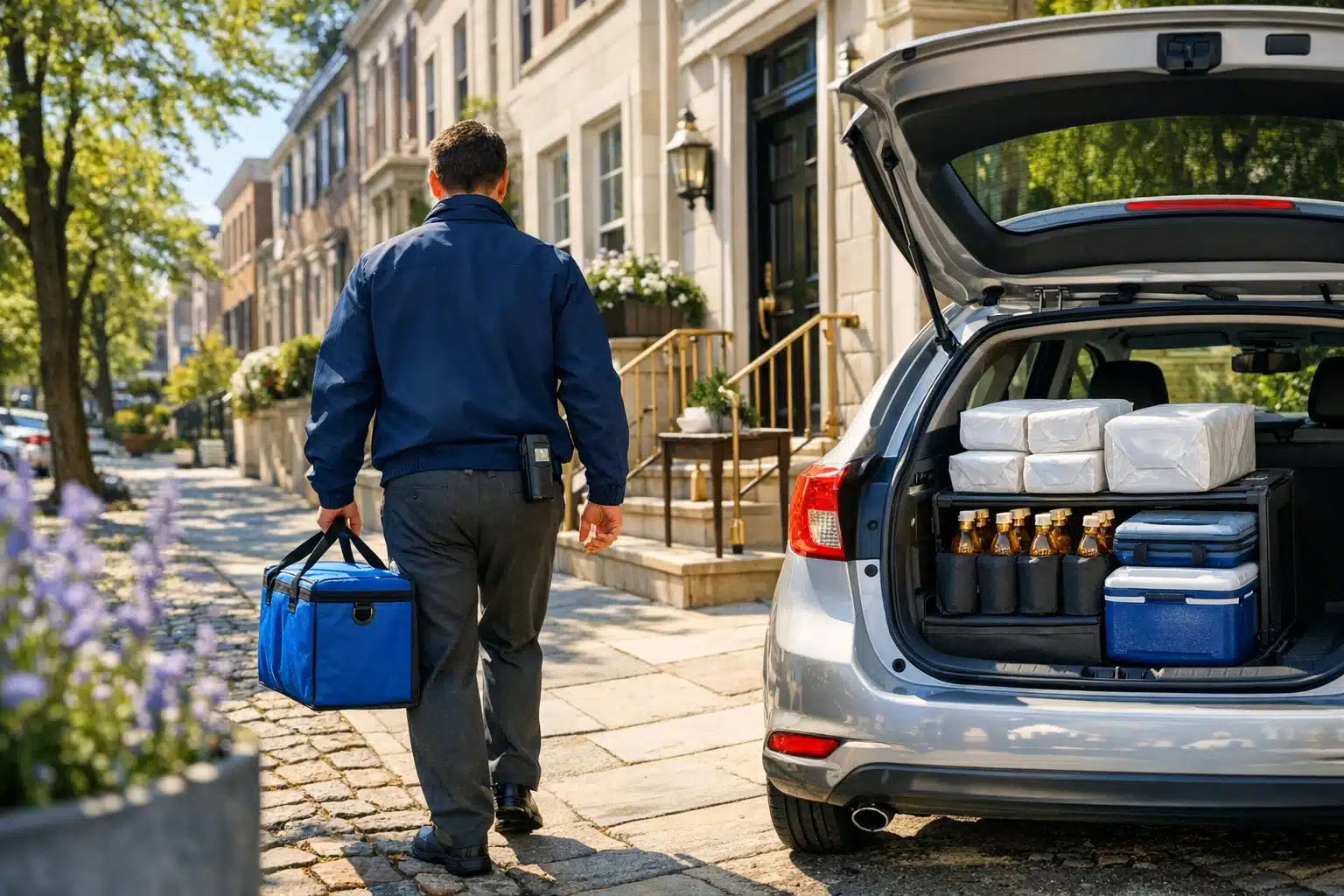
 Artificially generated image
 Exploring Medicine Delivery Driver Job Opportunities
Medicine delivery driver work sits at the crossroads of healthcare, logistics, and customer service, making it more important than many people realize. As pharmacies expand home delivery and patients seek convenience, dependable drivers help prescriptions reach doorsteps safely and on time. For job seekers, this niche offers flexible entry points, meaningful daily work, and exposure to a growing service model. This article maps the field, explains the requirements, and shows how to judge real opportunities with a practical eye.
Article Outline and Why This Job Category Matters
Before diving into the details, it helps to see the road map. This article moves through five main topics: what medicine delivery driver work is, what the daily routine looks like, how pay and hiring models differ, which skills matter most, and how applicants can find strong openings without wasting time on vague listings. That outline is useful because this role can look simple from a distance, yet the reality is more layered. A driver is not merely moving parcels from one address to another. In many cases, that parcel may contain antibiotics needed after surgery, maintenance medication for a chronic condition, or urgently needed supplies for a patient who cannot travel easily.
- Why the role is growing and who depends on it
- What tasks fill a normal shift
- How employment types affect earnings and stability
- Which skills help drivers perform well and stay organized
- Where to look for openings and how to judge them wisely
The relevance of the job has increased with changes in healthcare habits. More patients expect home delivery, the same way they expect convenience in banking, shopping, and communication. Pharmacies, hospitals, specialty medication providers, and third-party courier companies have adapted by building stronger last-mile delivery networks. This matters especially for older adults, people recovering at home, caregivers managing multiple prescriptions, and patients in areas where transportation is limited. A small package can carry outsized consequences; arriving on time is not just a service feature, but sometimes part of a treatment routine.
For job seekers, that creates a practical opportunity. Medicine delivery roles can appeal to people who prefer independent work, enjoy driving, or want a job connected to healthcare without completing years of formal study. Some positions are entry level, while others require experience with regulated deliveries, route management, or health system logistics. The field also spans several work arrangements. One employer may hire a driver as a regular hourly employee with set shifts, while another may use independent contractors who accept routes through a platform. That variety gives applicants choices, but it also means they must compare roles carefully rather than assuming every listing offers the same workload, protections, or income structure.
In short, this is a job category worth exploring because it blends human need with operational discipline. The work can feel grounded and immediate. You can finish a shift knowing your route was not abstract productivity on a spreadsheet; it was part of how healthcare reached real people in real neighborhoods.
What Medicine Delivery Drivers Actually Do During a Typical Workday
A typical day for a medicine delivery driver begins long before the first doorbell rings. In many settings, drivers start by reviewing the route, checking delivery windows, confirming package counts, and making sure each item is correctly labeled for the right patient or facility. Depending on the employer, the driver may scan packages into a mobile system, verify chain-of-custody procedures, and inspect storage containers used for temperature-sensitive items. The image some people have of casual package drop-offs usually does not fit here. Accuracy matters, because errors can create delays, privacy issues, or compliance problems.
Once on the road, the job becomes a balance of timing, communication, and attention to detail. Deliveries may go to private homes, clinics, assisted living communities, or sometimes local healthcare offices. Some orders can be left only after identity checks or signature capture, while others require direct handoff to a caregiver or facility staff member. In certain workflows, drivers must document failed attempts, return undelivered medication, or contact dispatch when a patient is unavailable. This means the role includes problem-solving, not just transportation.
- Reviewing assigned routes and deadlines
- Loading packages in a logical stop order
- Using apps or scanners to confirm pickups and drop-offs
- Following privacy and handling procedures
- Reporting delays, address issues, and unsuccessful deliveries
The work environment also varies by employer. A driver employed directly by a local pharmacy may handle a smaller service area and build familiarity with repeat customers. A hospital courier may move medications between campuses, outpatient centers, and partner sites, often under tighter institutional procedures. A contractor working through a delivery network may manage flexible route assignments and cover broader geography, sometimes using personal vehicles. The day-to-day rhythm changes accordingly. One role might feel steady and neighborhood-based. Another may resemble logistics work with stricter scheduling and more route density.
There is also a human side to the job that does not show up neatly in job ads. Drivers may meet people who are tired, anxious, grateful, confused, or in pain. A polite explanation, a calm tone, or patience at the doorway can make the interaction smoother. That does not mean drivers give medical advice; they should not. But it does mean the role includes professionalism under ordinary emotional pressure. In practice, employers often value drivers who are dependable and discreet just as much as those who know how to reach every address quickly.
By the end of a shift, there may still be post-route tasks: returning undelivered items, submitting logs, reconciling scans, reporting incidents, and preparing for the next day. The result is a job that combines elements of courier work, customer service, and healthcare support. It is active without being chaotic, structured without being repetitive, and demanding in ways that reward careful habits.
Qualifications, Hiring Requirements, and How Pay Models Compare
One reason medicine delivery work attracts a wide range of applicants is that the entry path is often more accessible than many healthcare jobs. Still, accessible does not mean effortless. Employers usually want drivers who can prove they are trustworthy, punctual, and capable of following procedures without close supervision. Common requirements include a valid driver’s license, a reasonably clean driving record, legal work authorization, and the ability to pass a background check. Some roles also ask for a smartphone, basic app literacy, proof of insurance, or access to a reliable personal vehicle if the company does not provide one.
Physical demands are usually moderate but real. Drivers may spend long hours sitting, walking to doors, climbing stairs, and carrying small to medium packages. They may work in heat, rain, or winter conditions. Some postings mention lifting thresholds, though medicine packages are often lighter than standard freight. The more important requirement is consistency. Employers do not simply need someone who can drive; they need someone who can show up, follow instructions, and complete each stop without cutting corners.
The biggest differences appear in the employment model, and this is where applicants should read carefully.
- W-2 employee roles often provide hourly pay, scheduled shifts, training, and sometimes benefits such as paid time off or health coverage.
- Independent contractor roles may offer more flexibility, but workers may handle their own fuel, maintenance, taxes, and insurance responsibilities.
- Healthcare system courier positions can be more formal, with stricter procedures, internal reporting, and clearer advancement routes.
- Retail pharmacy delivery roles may feature predictable local routes and more direct customer interaction.
Pay varies widely based on region, urgency level, route density, employer type, and whether the vehicle is company-owned or personally owned. A job that appears to pay more on paper may not be better after fuel, wear and tear, parking, phone use, and unpaid waiting time are considered. That is why applicants should compare net earnings, not just the number shown in the headline. A regular hourly job with fewer hidden costs can outperform a flashy contractor listing that transfers most operating expenses to the driver.
It is also worth paying attention to the tone and clarity of job ads. Strong listings usually explain the schedule, service area, delivery volume, compensation method, and required documentation. Weak listings often rely on vague promises such as flexible earnings without outlining mileage expectations or downtime. When details are missing, candidates should ask direct questions. Who pays for fuel? Is the route fixed or variable? Are evening or weekend shifts required? Is there training on privacy, package handling, and delivery verification?
Overall, the best opportunity depends on the worker’s priorities. Someone seeking stability may prefer a pharmacy or hospital position with a set schedule. Someone valuing flexibility may lean toward contractor work. The smart move is to judge each role as a business arrangement, not just a driving task.
Skills, Challenges, and What Helps Drivers Stand Out
Success in medicine delivery work depends on more than the ability to operate a car safely. The strongest drivers combine logistics discipline with calm customer-facing behavior. Route awareness, time management, and accurate documentation are central. If a driver loses track of a stop, skips a required signature, or mishandles a time-sensitive package, the problem can ripple outward quickly. For that reason, employers often value habits that sound ordinary but have real operational weight: double-checking labels, charging the phone before a shift, planning around traffic, and documenting exceptions clearly.
Customer service matters too, though it looks different here than in retail. A medicine delivery driver may interact with elderly residents, family caregivers, busy clinic staff, or patients who are not feeling well. Courtesy, discretion, and patience can prevent minor confusion from turning into a complaint. The job sometimes asks for a steady presence rather than a cheerful sales style. In other words, this is not about charm for its own sake. It is about being respectful, clear, and dependable when people need the transaction to be easy.
- Attention to detail when matching packages and addresses
- Comfort with navigation apps, scanning tools, and delivery software
- Professional communication with patients, dispatchers, and pharmacy staff
- Adaptability when routes change or recipients are unavailable
- Judgment about when to ask questions rather than guess
The challenges are real. Traffic can stretch delivery windows. Apartment buildings may have access barriers. Weather can slow an otherwise smooth route. Some customers may not answer calls from unknown numbers, making handoff harder. Drivers can also encounter emotionally heavy moments, especially when delivering to households dealing with illness, mobility limitations, or recovery after hospitalization. The work rarely becomes dramatic in the cinematic sense, yet it can carry a quiet seriousness that some people appreciate and others may find draining.
So how does a driver stand out? Reliability is the first advantage. Employers remember the person who arrives on time, follows the process, and makes fewer avoidable errors. Clear communication is the second. If a delay happens, reporting it early is far better than hoping no one notices. The third advantage is professional curiosity. Drivers who learn their employer’s systems, understand route logic, and take package handling seriously often become trusted quickly. In some organizations, that trust can lead to preferred routes, additional hours, training responsibilities, or movement into broader logistics roles.
There is a simple truth at the center of this job: routine creates excellence. The best drivers are not usually the fastest in a reckless sense. They are the ones who build repeatable habits that protect accuracy. In a field linked to healthcare, that kind of consistency is not dull. It is valuable.
Where to Find Medicine Delivery Jobs and Final Advice for Job Seekers
If you are ready to explore this field, begin with the full range of employers rather than limiting your search to generic delivery apps. Local pharmacies, large retail pharmacy chains, hospital systems, specialty medication providers, home healthcare suppliers, and medical courier companies all hire for related roles. Staffing agencies sometimes place drivers in temporary or temp-to-hire positions, which can help applicants gain experience. Community job boards can uncover smaller regional employers, while major job platforms may surface larger logistics networks that support pharmacy delivery behind the scenes.
When reviewing openings, read slowly and compare structure, not just convenience. A polished listing should tell you whether the role is employee-based or contract-based, what vehicle is required, how routes are assigned, and what the shift pattern looks like. If the post highlights flexibility, ask what that means in practice. Flexible for whom, the company or the worker? A route that changes daily may suit one person and frustrate another. The more clearly you understand the arrangement, the better your decision will be.
- Search pharmacy, hospital, and courier websites directly
- Use job boards but verify details with the employer
- Ask about mileage, fuel responsibility, and route size
- Confirm whether training, uniforms, and equipment are provided
- Look for signs of organized dispatch and realistic delivery expectations
Applications improve when they speak the language of the job. A resume should emphasize safe driving, punctual attendance, customer interaction, route familiarity, mobile app use, and any experience handling sensitive deliveries. Interview answers should show judgment. Employers want to hear how you handle missed recipients, schedule pressure, address confusion, or documentation issues. They are often less impressed by vague claims of hard work than by calm examples of accuracy and accountability.
For many job seekers, the biggest question is whether this work is worth pursuing long term. The answer depends on your goals. If you want quick access to work with a clear daily purpose, medicine delivery can be a strong option. If you want a foothold near the healthcare sector, it can offer useful exposure to systems, standards, and patient-centered service. If you want maximum income with minimal structure, it may feel more demanding than expected because healthcare-related delivery tends to reward precision over speed alone.
For the target audience considering this path, the best advice is practical: choose roles with clear expectations, calculate your true costs, and treat reliability as your strongest professional asset. A good medicine delivery job will not promise magic. It will offer something more solid: a way to earn by doing careful work that matters to people. For many applicants, that is reason enough to keep reading the listings, ask better questions, and take the opportunity seriously.