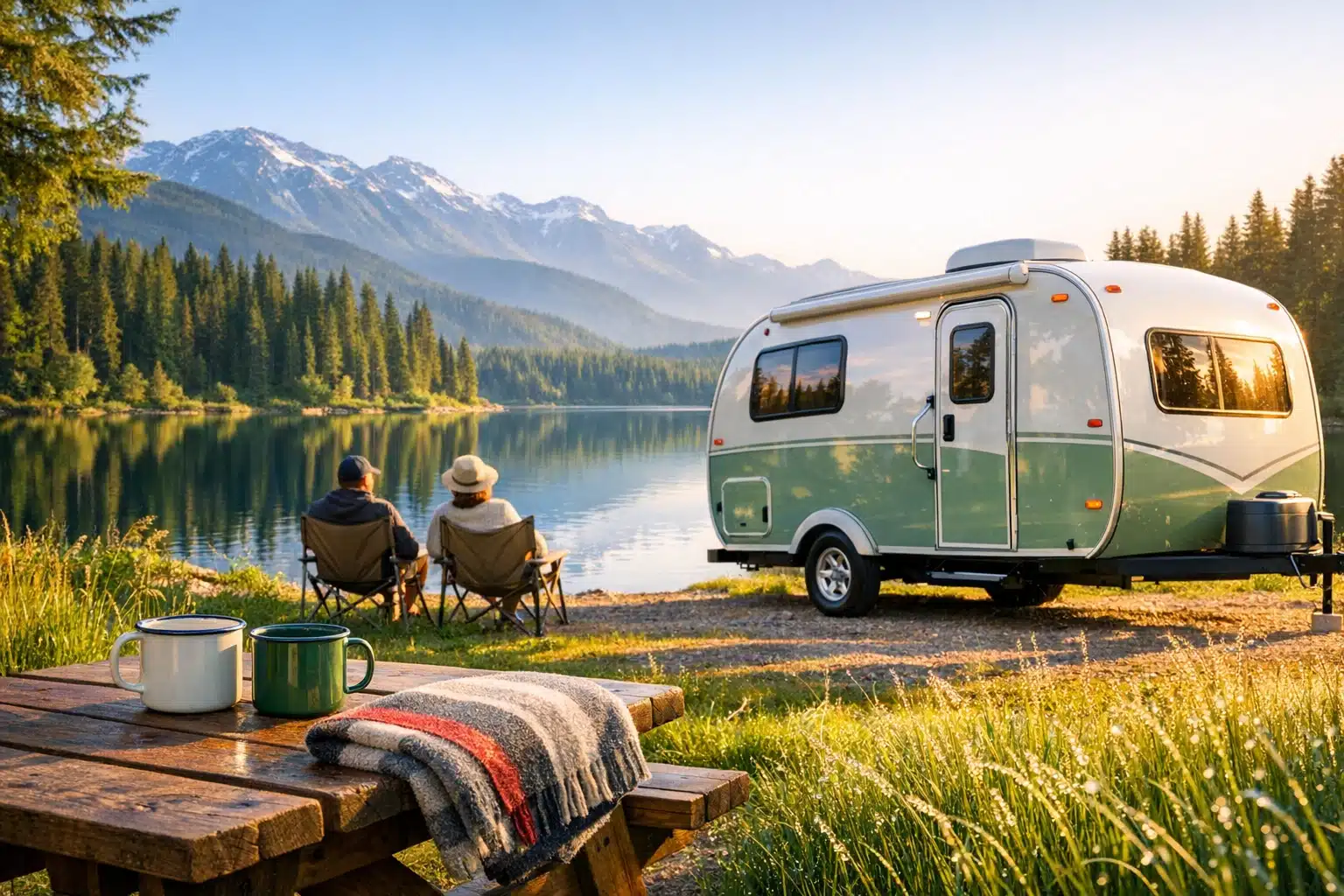
 Artificially generated image
 A Guide to Small Campers for Couples
For many couples, camping is not really about surviving outdoors; it is about moving through the world with fewer complications and more time together. A small camper can make spontaneous weekends easier, lower lodging costs on longer drives, and deliver real comfort without requiring a huge tow vehicle or a sprawling campsite. The tricky part is that compact models vary widely in space, weight, features, and price, so the smartest choice comes from matching the camper to your habits rather than chasing the flashiest floorplan.
1. Why Small Campers Appeal to Couples and How This Guide Is Structured
Small campers occupy a sweet spot that many couples discover only after comparing tents, hotels, and large RVs. They offer more shelter and convenience than tent camping, but they avoid much of the cost, storage burden, and mechanical complexity that comes with oversized rigs. For two travelers, that balance can be especially attractive. You usually need fewer sleeping spaces, less kitchen capacity, and less storage volume than a family of four, which means a compact unit can feel efficient rather than restrictive. In practical terms, smaller trailers are often easier to tow, easier to store, and more likely to fit in older campgrounds or tighter scenic sites where a long RV might struggle. That flexibility matters when the goal is to chase quiet lakes, mountain pull-offs, and low-stress weekends instead of wrestling with logistics.
This guide follows a clear outline so you can compare options without getting lost in RV jargon:
– First, it explains why compact campers work well for couples and where the biggest compromises show up.
– Next, it compares the main categories, including teardrops, compact travel trailers, pop-up or A-frame campers, and van-based campers.
– Then, it looks at the details that shape everyday comfort, such as bed access, bathroom setup, cooking space, and climate control.
– After that, it covers towing numbers, true ownership costs, and buying mistakes that can turn excitement into regret.
– Finally, it closes with practical advice for choosing a camper that fits your relationship, travel style, and long-term habits.
The appeal is not only financial, although cost is part of the story. Many couples choose small campers because they support a lighter kind of travel. Setup can be faster. Fuel use is usually lower than with a large motorhome. Cleaning takes less time. Maintenance is simpler because there are fewer systems to inspect and fewer surfaces to repair. Yet the compact format also demands honest thinking. You may have limited indoor seating on rainy days, a smaller refrigerator, tighter storage, and little privacy if one person wakes early while the other sleeps in. In other words, a small camper does not magically create harmony; it simply reveals whether your routines, expectations, and habits travel well together. When chosen carefully, though, it can feel like carrying a tiny apartment with a front-row seat to the landscape.
2. Comparing the Main Types of Small Campers for Two People
The phrase small camper sounds simple, but it covers several very different formats. A teardrop trailer is usually the most minimalist option. Many models weigh roughly 900 to 2,000 pounds, which makes them appealing to owners of smaller SUVs and crossovers. They typically provide a sleeping cabin for two and a rear hatch that opens to an outdoor galley. The advantages are easy towing, compact storage, and a charming, stripped-down style that many travelers love. The downside is just as clear: there is usually no standing room, no indoor bathroom, and not much flexibility in bad weather. For couples who mostly want a cozy place to sleep after hiking, sightseeing, or sitting by the fire, a teardrop can be enough. For anyone who wants to cook indoors during a storm or change clothes comfortably, it may feel too spare.
Compact travel trailers sit in the middle of the market and often make the best all-around choice for couples. Many run about 13 to 20 feet in body length and weigh from roughly 1,800 to 3,500 pounds before cargo. These units often include standing height, a fixed bed or convertible dinette, a small kitchen, and in some cases a wet bath that combines shower and toilet in one waterproof room. They give you much more weather protection and day-to-day livability than a teardrop without forcing you into a very large tow vehicle. The tradeoff is that they cost more, present more wind resistance on the road, and introduce more systems that need care.
Pop-up campers and A-frame campers solve a different problem. They collapse lower for travel, which can improve aerodynamics and make driveway storage easier. Pop-ups tend to be roomy when opened, but canvas walls offer less insulation and less security than hard-sided trailers. A-frames use rigid panels and usually set up faster, but interior space can still be limited. Then there are van-based campers, often called Class B motorhomes or camper vans. They are easy to drive, self-contained, and ideal for frequent road movement, but they are often far more expensive than towable small campers. As a quick comparison:
– Teardrop: light, simple, romantic, but minimal
– Compact travel trailer: balanced comfort and practicality
– Pop-up or A-frame: smart for storage and lighter towing
– Camper van: mobile and convenient, but usually the most expensive path
No single format wins for everyone. The right answer depends on whether you value simplicity, indoor comfort, fuel efficiency, mobility, or year-round use the most.
3. Layout, Comfort, and Daily Living Features That Matter Most
When couples shop for campers, they often focus first on exterior style, upholstery colors, or the number of gadgets advertised in brochures. In real use, however, floorplan quality matters far more than decorative touches. The first thing to study is the bed. A fixed bed is usually the easiest arrangement because it removes the daily chore of converting a dinette or sofa into a sleeping area. It also matters how the bed is positioned. A corner bed can save space, but one person may have to climb over the other during the night. Twin beds solve that issue, though they can make the interior feel narrower. Some couples happily share a compact full or queen mattress, while others quickly discover that a few extra inches of width can decide whether a weekend feels restful or cramped.
Bathroom design is another make-or-break feature. Some couples do perfectly well with campground restrooms and an outdoor shower setup. Others want a built-in toilet at minimum, especially for overnight roadside stops or cold-weather trips. A wet bath is common in small trailers because it saves space, but it requires tolerance for a compact, multifunction room. If one partner values privacy, extended off-grid stays, or greater comfort in poor weather, a bathroom may move from luxury to necessity very quickly.
The kitchen also deserves realistic scrutiny. Ask simple questions rather than dreamy ones. Can both of you prepare breakfast without colliding? Is there enough counter space for coffee, chopping, and dishwashing? Where will dry food go? A tiny fridge may be fine for two-night trips but frustrating on a week-long route. Useful comfort features often include:
– Ventilation from roof fans and operable windows
– Adequate insulation for shoulder-season travel
– Storage that separates clothing, cookware, and outdoor gear
– Seating that works even when the bed is made
– Shore power, battery capacity, and solar readiness for flexible camping
One overlooked factor is how the camper feels during unglamorous moments. Imagine arriving in the rain, changing out of muddy shoes, or waiting out a windy afternoon. Can you stand up fully? Can one person read while the other cooks? Is there somewhere to place phones, jackets, and bags without turning the aisle into a cluttered obstacle course? The best small camper for a couple does not simply fit two bodies; it supports two routines. If the interior lets each person move, rest, and contribute without friction, the whole trip becomes calmer. That is the hidden luxury of a well-designed compact space.
4. Towing, Budget, and the Real Cost of Ownership
One of the most common mistakes first-time buyers make is assuming that a camper listed as lightweight will automatically match their vehicle. In reality, towing suitability depends on more than a marketing label. You need to compare the camper’s gross vehicle weight rating, or GVWR, with your vehicle’s tow rating, and you also need to pay attention to payload. Payload includes passengers, luggage, hitch weight, pets, and anything else carried in the tow vehicle. Tongue weight on many travel trailers often lands around 10 to 15 percent of the loaded trailer weight, which means a 3,000-pound loaded trailer could place roughly 300 to 450 pounds on the hitch before adding people or cargo inside the vehicle. That is why a trailer that looks acceptable on paper can still exceed safe limits in the real world.
Budgeting deserves the same level of honesty. Entry-level teardrops may start around the lower five-figure range, while compact travel trailers commonly stretch from the mid-teens into the $30,000 range and beyond depending on construction, solar packages, bathroom equipment, and brand reputation. Pop-ups and A-frames can sit in similar entry zones, and camper vans often begin far higher, sometimes reaching the cost of a small home down payment. The purchase price, however, is only the visible layer. True ownership costs can include:
– Insurance
– Registration and taxes
– Storage fees if you cannot keep the camper at home
– Hitch equipment, brake controller, and mirrors
– Routine maintenance for tires, seals, bearings, batteries, and appliances
– Campground fees, propane, and occasional repairs from leaks or road damage
Used campers can offer strong value, but inspection is critical. Water intrusion is the villain of the RV world. Soft spots in floors, staining near seams, warped panels, and a musty smell can signal expensive problems hidden behind pretty surfaces. It is often smarter to buy a simpler, well-maintained used unit than a feature-packed trailer with evidence of neglect. New models bring warranty protection, but they also depreciate and may still require early warranty visits for small defects.
Think beyond the sale and picture the full ownership cycle. Where will you store the camper? Can you back it into your driveway? Will your regular routes include steep grades, urban parking, or long interstate drives with crosswinds? A romantic image of freedom is wonderful, but a realistic plan is better. The couples who stay happiest with small campers are usually the ones who do the arithmetic first and the daydreaming second.
5. Final Thoughts: Choosing the Right Small Camper for Your Life Together
The best small camper for a couple is not the one with the boldest exterior graphics or the longest options sheet. It is the one that quietly fits your habits, your vehicle, your budget, and your way of traveling together. If you love short escapes centered on hiking, cycling, paddling, or national park stops, a teardrop or very simple hard-sided trailer may be all you need. If you expect to travel for a week or more at a time, work remotely, or spend evenings indoors during changing weather, a compact trailer with standing room, real seating, and a bathroom will likely feel more sustainable. If you move constantly from place to place and value stealth, urban parking, and ease on the road, a van-based camper may make sense despite its higher price.
A useful final filter is to think in terms of couple profiles rather than product categories:
– Minimalist explorers: prioritize low weight, fast setup, and outdoor living
– Comfort-first travelers: prioritize bed quality, bathroom access, and climate control
– Scenic road trippers: prioritize towing ease, fuel efficiency, and frequent overnight stops
– Longer-stay campers: prioritize storage, kitchen function, and rainy-day livability
– Four-season adventurers: prioritize insulation, heating performance, and hard-sided construction
Before buying, walk through any model with a practical script. Pretend one person is making coffee while the other gets dressed. Open every cabinet. Sit on the toilet if there is one. Lie on the bed. Stand near the sink. Ask where shoes, jackets, chargers, and dirty laundry would go. These tiny questions often reveal more than glossy brochures or social media tours. A camper can look beautiful in a dealer lot and still feel awkward after two nights.
For couples, the most valuable outcome is not owning a camper; it is creating a style of travel that feels light, repeatable, and enjoyable. A well-chosen small camper can turn an ordinary Friday into a departure point, a parking spot into a front porch, and a modest budget into years of shared movement. Choose patiently, compare honestly, and let your real habits lead the decision. When the camper fits the relationship instead of challenging it at every step, the road opens up in a way that feels both simple and deeply rewarding.